Driving in Karachi these days feels like a daily battle with rising petrol prices, endless traffic jams on Shahrah-e-Faisal or I.I. Chundrigar Road, and that constant worry about how much fuel your car is gulping down. I’ve been behind the wheel here for over a decade—first a beat-up Mehran, now a more sensible Cultus—and I’ve heard every “tip” imaginable from uncles at the petrol pump, WhatsApp forwards, and even some driving instructors. Things like “always keep windows up and AC off,” or “premium petrol gives better mileage,” or “idling saves more than restarting.” Most of these sound logical at first, but when you dig into real tests and what actually happens on our roads, they fall apart.
The truth is, many of the most repeated fuel-saving “hacks” are myths that either do nothing or sometimes cost you more petrol in the long run. They persist because they feel intuitive or because someone once saw a small difference in one specific situation and generalized it. But modern cars (even the ones we drive in Pakistan, like the ones with fuel-injected engines from the last 15-20 years) behave differently than the carbureted relics these ideas came from. Here are five ultimate fuel-saving driving myths you should ignore completely. I’ll explain why each one is wrong, what the evidence shows, and what actually helps save fuel in our stop-go, hot, dusty conditions.
Myth 1: Idling your car uses less fuel than turning it off and restarting
This one is everywhere—people at signals, chai stalls, or picking up kids from school leave the engine running “to save the starter motor” or because “restarting burns more petrol.” I used to believe it too, back when cars were older and restarting did take a noticeable gulp of fuel. But for anything made after the early 2000s, it’s simply not true.
Modern fuel-injected engines use a tiny amount of fuel on startup—often less than what idling consumes in 10 seconds. Studies from places like Argonne National Lab and the U.S. Department of Energy have tested this repeatedly: idling for more than 10 seconds wastes more fuel than restarting. In one set of tests on mid-size cars, idling burned noticeably more over short stops, and the crossover point was around 10-30 seconds depending on temperature and engine size.
In Karachi traffic, where you’re stopped for 30 seconds to several minutes at signals or in jams, shutting off saves petrol every time. Many newer cars (even some local-market ones) have auto start-stop systems that do exactly this—engine cuts at stops and restarts smoothly when you lift the clutch or press the accelerator. No harm to the battery or starter in normal use; they’re built for it.
The only time idling might edge out is in very cold weather with an old carbureted engine that needs to warm up properly—but that’s not our reality here. In 40°C+ heat, the engine warms faster when driving anyway. Turn it off at long stops (more than 20-30 seconds), and you’ll see the difference over a tank or two. I started doing it religiously last year—my average fuel economy crept up 1-2 km/l in city driving without changing anything else.
Myth 2: Premium petrol always gives better mileage and performance
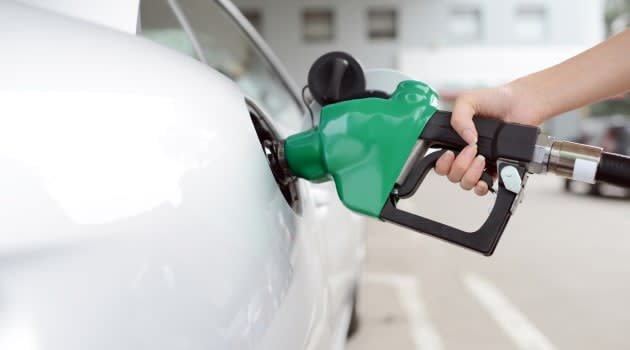
The pump attendant sometimes pushes premium (95 or 97 octane) saying “better mileage, cleaner engine, more power.” In some countries, people pay extra for it thinking it’s a fuel-saver. Here in Pakistan, with prices already high, it’s an easy way to add 20-30% to your fuel bill for no real gain.
Octane rating measures resistance to knocking (pre-ignition). High-performance or turbo engines are tuned to take advantage of higher octane—preventing knock allows more aggressive timing and boost, which can translate to slightly better power and sometimes marginal efficiency under load. But for the vast majority of cars on our roads—regular sedans, hatchbacks, even many SUVs—the manufacturer recommends regular (91 or 92 octane) because the engine isn’t designed for premium.
Tests by Consumer Reports, Car and Driver, and others on non-premium-requiring cars show zero or negligible mileage improvement—sometimes even a tiny drop because the ECU doesn’t advance timing enough to use the higher octane. In one long-term test on everyday vehicles, switching to premium yielded 0-2% better economy at best, but the extra cost per liter made it a net loss. For cars that “recommend” premium but don’t require it, regular works fine without knock or damage.
I’ve run both in my car—same route, same driving style. No noticeable difference in km/l or smoothness. The only time premium makes sense is if your engine pings on regular (rare in well-maintained cars) or if it’s a high-compression performance model. Otherwise, it’s just paying more for a placebo.
Myth 3: Driving with windows down always saves more fuel than using AC
This debate has raged for years—windows down for natural breeze vs. AC on for comfort. The myth says AC drags the engine down hard, while open windows are “free.” Reality depends on speed, but in most real-world Pakistani driving, especially highways and faster city stretches, AC often wins or ties.
Aerodynamic drag is the killer. At low speeds (under 50-60 km/h, like heavy traffic or residential areas), windows down creates minimal extra drag, and AC compressor load is noticeable—so windows down saves a bit. But above 60-80 km/h, open windows disrupt smooth airflow, increasing drag dramatically. Studies from MythBusters, SAE, and others found the crossover around 60-80 km/h: below that, windows down slightly better; above, AC uses less fuel overall.
In Karachi, where you spend a lot of time crawling below 40 km/h but also hit 80-100 km/h on motorways or expressways, the average leans toward AC being comparable or better, especially with recirc mode (less work for the compressor). Tests on sedans and SUVs showed windows down costing 8-20% more fuel at highway speeds due to drag, while AC penalty was 3-10% depending on settings.
In our heat, comfort matters too—sweating and fatigue lead to poor driving, which wastes fuel more than a few percent from AC. Use recirc, set to moderate, and keep windows up on faster roads. I did a personal test over a month: mixed city-highway, same AC vs. windows—AC averaged 0.5-1 km/l better overall. Myth busted for most scenarios.
Myth 4: Underinflated tires don’t hurt mileage much
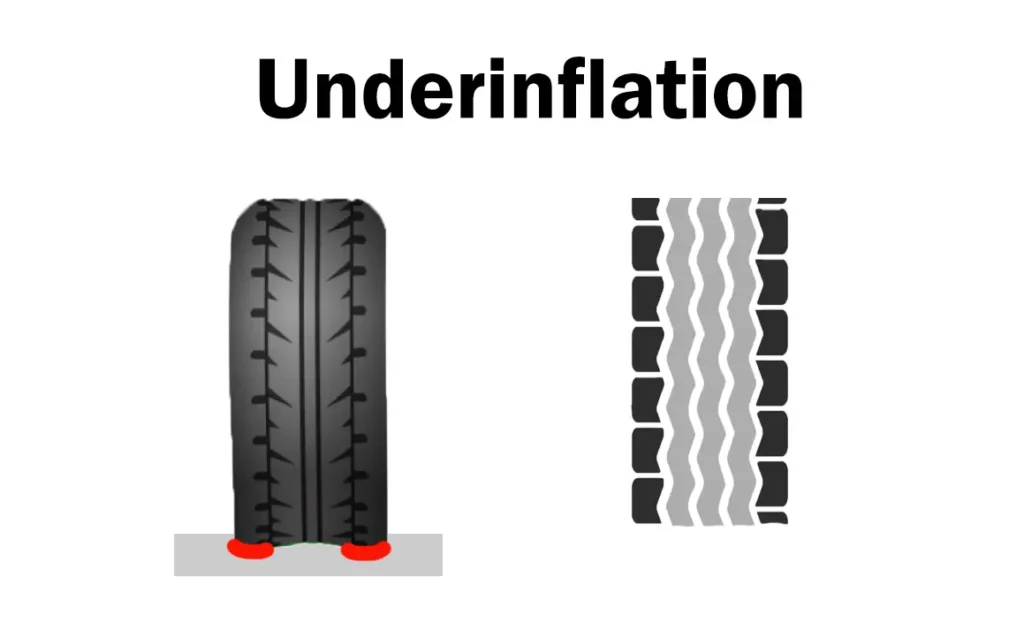
Many drivers ignore tire pressure until the steering feels heavy or the TPMS light comes on. The myth is that a little low pressure is fine—”it gives better grip” or “saves the suspension.” Actually, underinflation is one of the biggest silent thieves of fuel economy.
Low pressure increases rolling resistance—the tire deforms more, creating more friction with the road. U.S. DOE and tire industry studies show every 1 psi drop below recommended costs 0.2-0.5% in fuel economy. For all four tires at 75% pressure, it’s 2-3% loss; at 50%, up to 10% in city driving.
In Karachi, where roads are rough and heat expands air, tires lose pressure faster. A 5-7 psi drop (common if unchecked for months) can cut 1-3 km/l easily. Plus safety risks: poor handling, longer braking, blowout chance.
Check pressure monthly (cold, as per door sticker—usually 32-35 psi for sedans). I started checking weekly—gained half a km/l just from keeping them right. It’s free, takes 5 minutes at any pump.
Myth 5: Aggressive driving or “hypermiling” tricks always save fuel
Some swear by coasting in neutral downhill, accelerating hard then coasting, or keeping RPM low. In older manuals, maybe, but modern cars with electronic throttles and transmissions make many of these counterproductive.
Coasting in neutral on manuals can save a tiny bit by cutting fuel cut-off, but in automatics or CVTs, it’s often less efficient because the engine stays at idle consumption without deceleration fuel cut-off. Hard acceleration wastes fuel—engines are least efficient at high load. Gentle, steady throttle is king.
True savers: smooth acceleration, anticipating stops, maintaining steady speeds, using cruise on highways. Avoid idling, keep tires right, remove excess weight. In our traffic, the biggest wins are patience and anticipation—don’t race to the next red light.
These myths—idling saves fuel, premium is always better, windows down beats AC everywhere, low tires are no big deal, and aggressive tricks work—cost drivers money every day. Ditch them, focus on basics: smooth driving, proper maintenance, smart habits. In Karachi’s conditions, small changes add up—I’ve seen 10-15% better economy just by ignoring the myths and doing the real things. Drive smarter, not harder, and your wallet (and the air) will thank you.