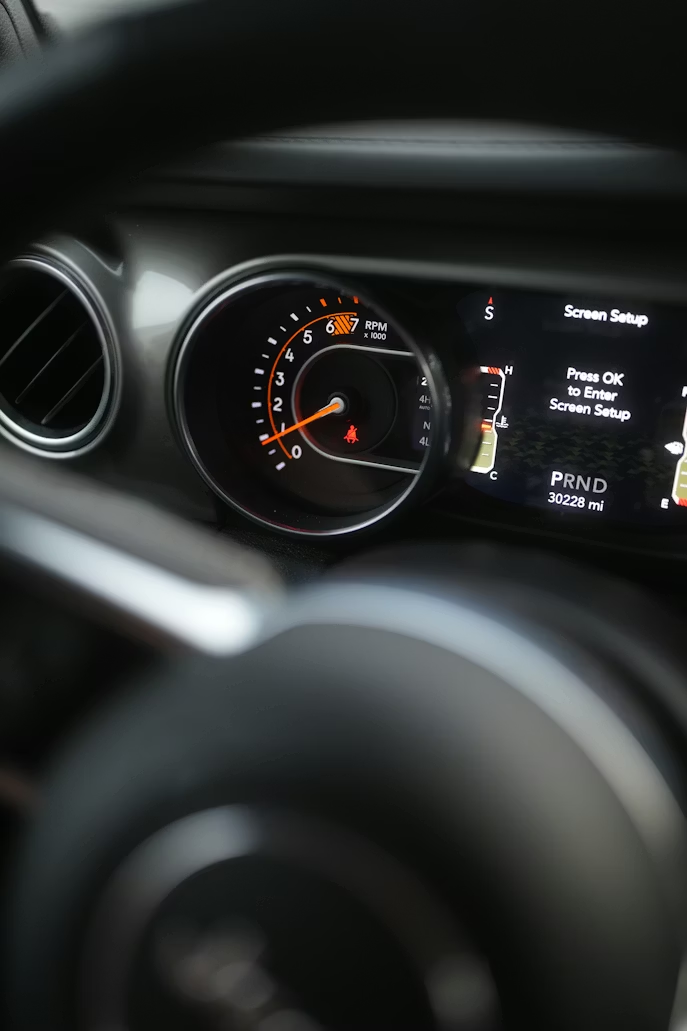
Daily commuting has a rhythm to it.
You wake up, get ready, start the car, and follow almost the same route every day. At some point, driving becomes automatic—you stop thinking about each action and just go through the motions.
That’s exactly where fuel efficiency quietly slips away.
Because when driving becomes routine, inefficiencies become routine too.
I didn’t notice it at first. My commute was the same, my car was the same, but my fuel usage kept fluctuating. Some weeks I spent noticeably more without changing anything obvious.
What changed everything wasn’t a new car or drastic measures. It was refining the basics—the small driving habits that repeat every single day.
This article walks through eight powerful fuel-saving driving basics specifically for daily commutes. These aren’t complicated techniques. They’re simple adjustments that, when repeated daily, create long-term savings.
why daily commuting needs a different fuel-saving approach
Driving occasionally is different from commuting daily.
Daily commuting means:
- Repeated routes
- Predictable traffic patterns
- Consistent driving conditions
That makes it the perfect environment to build fuel-efficient habits.
Instead of guessing, you can optimize.
quick overview of the 8 driving basics
| Basic | Difficulty | Impact | Daily Usefulness |
|---|---|---|---|
| Gentle acceleration | Easy | High | Very High |
| Consistent speed control | Easy | High | Very High |
| Smart braking habits | Easy | Medium–High | High |
| Gear efficiency awareness | Easy–Medium | High | High |
| Traffic anticipation | Medium | High | Very High |
| Idling reduction | Easy | Medium | High |
| Tire condition awareness | Easy | Medium | Medium |
| Route timing adjustment | Easy | High | Very High |
- gentle acceleration (start your commute right)
The first few minutes of your commute matter more than you think.
Many drivers accelerate quickly when leaving home or at the first signal. It feels natural—you want to get moving.
But rapid acceleration burns extra fuel immediately.
acceleration comparison table
| Start Type | Fuel Efficiency | Fuel Use |
|---|---|---|
| Sudden start | Low | High |
| Moderate start | Medium | Moderate |
| Gentle start | High | Low |
commute insight:
In stop-and-go traffic, this habit repeats dozens of times.
Small waste × many repetitions = big fuel loss.
simple adjustment:
Press the accelerator gradually and let the car build speed smoothly.
- maintain consistent speed (avoid the “accordion effect”)
One of the biggest fuel-wasters during commutes is inconsistent speed.
You speed up, slow down, brake, accelerate again—over and over.
speed fluctuation chart
| Driving Pattern | Efficiency |
|---|---|
| Constant speed | High |
| Mild variation | Medium |
| Frequent changes | Low |
real-world scenario:
On a 10 km commute, inconsistent speed can increase fuel usage by 10–15%.
commuter tip:
Maintain a safe distance from the car ahead to avoid constant speed adjustments.
- develop smart braking habits
Braking isn’t just about stopping—it’s about timing.
Most drivers brake too late and too hard.
Efficient drivers:
- Brake early
- Brake gently
- Sometimes don’t brake at all (just coast)
braking style comparison
| Style | Fuel Impact |
|---|---|
| Late braking | High consumption |
| Normal braking | Moderate |
| Predictive braking | Low consumption |
commute example:
Approaching a red light—start slowing down early instead of rushing and braking suddenly.
- use gears efficiently
For daily commuting, gear usage becomes repetitive—so small improvements go a long way.
gear usage impact
| Gear Behavior | Efficiency |
|---|---|
| High RPM driving | Low |
| Balanced shifting | Medium |
| Early upshifting | High |
manual car tip:
Shift up earlier instead of pushing the engine.
automatic car tip:
Use eco mode or light acceleration to keep RPM low.
- anticipate traffic flow
This is where commuting experience becomes an advantage.
You already know:
- Where traffic slows down
- Where signals are longer
- Where congestion builds
traffic awareness impact
| Awareness Level | Efficiency |
|---|---|
| Reactive driving | Low |
| Partially aware | Medium |
| Fully anticipative | High |
example:
If you know a certain intersection always slows down, ease off the accelerator before reaching it.
- reduce unnecessary idling
Idling is silent fuel loss.
Common situations:
- Waiting outside shops
- Sitting in parked cars with engine on
- Long signals
idling impact chart
| Idling Time | Fuel Wasted |
|---|---|
| 5 minutes | Moderate |
| 10 minutes | High |
| Daily habit | Significant |
commute habit:
If you expect to stop for more than a minute or two, consider turning off the engine (if safe and practical).
- monitor tire condition regularly
Your tires affect your commute every day—even if you don’t notice it.
tire condition vs efficiency
| Condition | Fuel Efficiency |
|---|---|
| Proper pressure | High |
| Slightly low | Medium |
| Underinflated | Low |
commuter reality:
Daily driving gradually reduces tire pressure.
simple habit:
Check tire pressure once every 2–3 weeks.
- adjust commute timing when possible
Timing can change everything.
Even a 10–15 minute difference can:
- Reduce traffic
- Improve speed consistency
- Lower fuel consumption
timing comparison chart
| Departure Time | Traffic Level | Fuel Efficiency |
|---|---|---|
| Peak hour | High | Low |
| Slightly early | Medium | Medium |
| Off-peak | Low | High |
real-world insight:
Leaving just 10 minutes earlier reduced both travel time and fuel usage.
how these basics work together
Individually, these habits help.
Together, they transform your commute.
combined savings table
| Factor | Estimated Savings |
|---|---|
| Acceleration control | 10% |
| Speed consistency | 10% |
| Smart braking | 8% |
| Gear efficiency | 10% |
| Traffic awareness | 10% |
| Idling reduction | 5% |
| Tire maintenance | 5% |
| Timing adjustment | 10% |
realistic total savings: 20–30%
before vs after commute behavior
| Before | After |
|---|---|
| Rushed driving | Controlled driving |
| Frequent braking | Smooth slowing |
| Random timing | Planned timing |
| High fuel use | Reduced fuel use |
patterns that become visible over time
Once you apply these basics, you’ll start noticing:
- Certain parts of your route waste more fuel
- Some habits repeat daily
- Small improvements create big weekly savings
weekly fuel usage example
| Week | Fuel Used | Notes |
|---|---|---|
| Week 1 | High | No optimization |
| Week 2 | Medium | Some improvements |
| Week 3 | Lower | Consistent habits |
common mistakes commuters make
- Driving aggressively due to time pressure
- Ignoring traffic patterns
- Maintaining poor tire pressure
- Idling unnecessarily
- Not adjusting timing
important reminder:
Commuting efficiency isn’t about speed—it’s about flow.
how long it takes to see results
| Habit | Initial Results | Full Habit Formation |
|---|---|---|
| Gentle acceleration | 2–3 days | 1–2 weeks |
| Speed control | 3–5 days | 2 weeks |
| Traffic awareness | 1 week | 3 weeks |
the mindset shift that changes everything
Instead of asking:
“How fast can I get there?”
Start asking:
“How smoothly can I get there?”
That one shift improves both fuel efficiency and driving comfort.
daily commute fuel-saving checklist
- Start gently
- Maintain steady speed
- Look ahead
- Brake early
- Shift smartly
- Avoid idling
- Check tires
- Adjust timing
quick reference table
| Situation | Best Action |
|---|---|
| Traffic signal ahead | Slow early |
| Open road | Maintain steady speed |
| Heavy traffic | Stay calm, avoid sudden moves |
| Starting drive | Accelerate gently |
FAQs
- What is the most effective fuel-saving habit for commuting?
Maintaining a steady speed and avoiding unnecessary braking are the most impactful.
- Does leaving earlier really save fuel?
Yes. Reduced traffic leads to smoother driving and lower fuel consumption.
- Is idling really that harmful?
Yes. It wastes fuel without moving the car and adds up over time.
- How often should I check tire pressure?
Every 2–3 weeks or before long drives.
- Can these habits reduce commute time too?
In many cases, yes—because smoother driving improves traffic flow.
- Do these basics work for all cars?
Yes. These principles apply to both manual and automatic vehicles.
final thoughts
Daily commuting doesn’t have to drain your fuel budget.
The key isn’t doing something extraordinary—it’s doing ordinary things better.
When you refine the basics, something interesting happens:
Your driving becomes smoother.
Your stress reduces.
And your fuel lasts longer without you constantly thinking about it.
That’s the real goal—not just saving fuel, but making efficiency part of your daily routine.