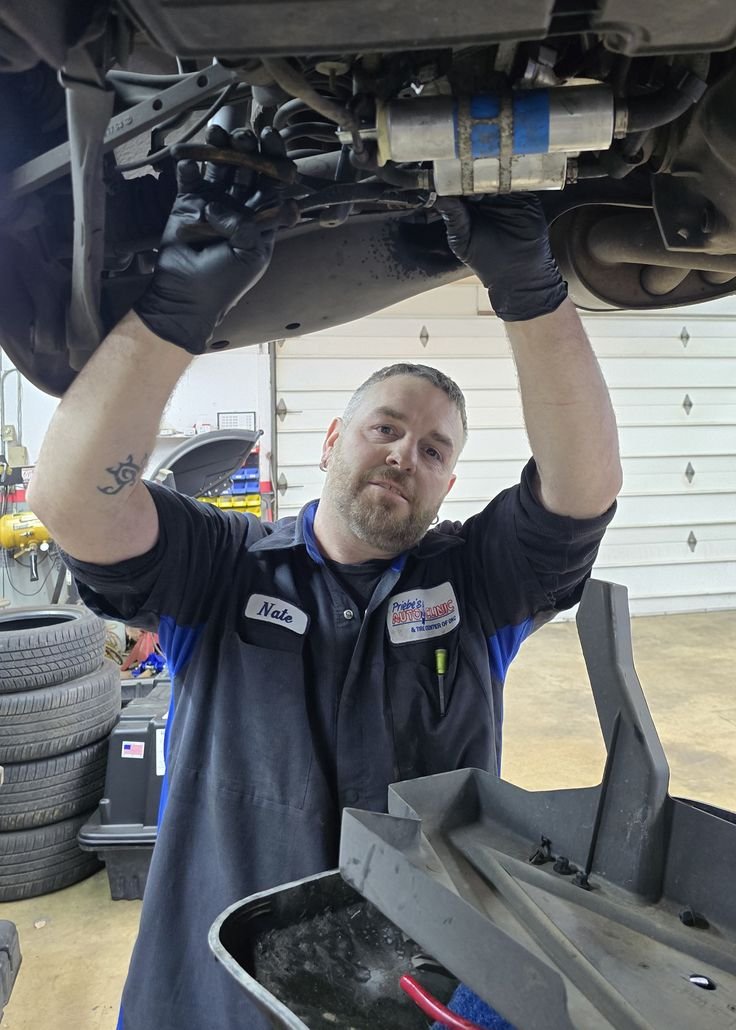
Most drivers assume fuel economy is fixed—something determined by engine size, fuel type, or manufacturer design. But if you spend time in a repair garage, you quickly realize something different: experienced mechanics quietly apply small, targeted maintenance tricks that noticeably improve fuel efficiency, especially in older or heavily used cars.
These aren’t the obvious tips you hear everywhere like “drive slower” or “check tire pressure.” Instead, they’re subtle adjustments and overlooked maintenance habits that professionals rely on to squeeze better mileage out of everyday vehicles.
This article unpacks five of those lesser-known fuel-saving tricks, explains why they work, and shows how you can apply them yourself.
- Resetting and recalibrating the fuel-air balance
Modern engines depend on a delicate balance between air and fuel. This ratio is constantly adjusted by the engine control unit (ECU), but over time—especially in older vehicles—the system can drift slightly out of calibration.
Mechanics often reset or recalibrate this system after certain maintenance tasks, even when it’s not strictly required. Why? Because sensors don’t always self-correct efficiently.
What happens when the balance is off:
- Too rich (excess fuel): wasted fuel, lower mileage
- Too lean (too much air): reduced power, potential engine stress
By resetting the ECU (often after replacing sensors, battery, or injectors), mechanics allow the system to relearn optimal fuel trims.
table: fuel-air imbalance effects
| Condition | Fuel Usage Impact | Engine Behavior |
|---|---|---|
| Balanced | Optimal | Smooth, efficient |
| Rich mixture | +10–20% usage | Sluggish, fuel smell |
| Lean mixture | Variable | Hesitation, overheating |
This “reset trick” is rarely discussed outside workshops, yet it can restore lost efficiency surprisingly quickly.
- Cleaning throttle body buildup
The throttle body controls how much air enters the engine. Over time, carbon deposits accumulate around the throttle plate, restricting airflow and disrupting idle control.
Many drivers never clean it unless there’s a noticeable issue. Mechanics, however, often include throttle body cleaning as a preventive step during routine service—especially in cars with declining mileage.
Why it matters:
- Dirty throttle = inconsistent airflow
- ECU compensates with extra fuel
- Idle becomes rough, efficiency drops
Even a thin layer of grime can alter airflow dynamics enough to affect fuel economy.
chart: throttle cleanliness vs airflow efficiency
| Throttle Condition | Airflow Efficiency | Fuel Efficiency Impact |
| Clean | 100% | Optimal |
| Light buildup | ~95% | -2–3% |
| Heavy buildup | ~85% | -5–10% |
Cleaning the throttle body is inexpensive and often delivers immediate improvements in responsiveness and mileage.
- Monitoring and optimizing short-trip engine wear
This is one of the most overlooked factors in fuel consumption. Mechanics know that cars driven mostly on short trips (under 10–15 minutes) rarely reach optimal operating temperature.
When the engine is cold:
- Fuel mixture is intentionally richer
- Oil is thicker, increasing friction
- Combustion is less efficient
Over time, this pattern reduces fuel economy significantly.
What mechanics quietly recommend:
- Occasionally take longer drives to fully warm the engine
- Avoid shutting off the engine immediately after short runs
- Combine errands into one trip
table: engine temperature vs efficiency
| Engine Temperature State | Fuel Efficiency |
| Cold start | -20% to -40% |
| Warming up | -10% to -20% |
| Fully warmed | Optimal |
This isn’t a “repair” in the traditional sense, but it’s a maintenance habit that mechanics consistently emphasize because of its long-term impact.
- Maintaining precise wheel bearing condition
Wheel bearings are rarely associated with fuel efficiency, but mechanics pay close attention to them—especially in high-mileage vehicles.
A worn or poorly lubricated wheel bearing creates subtle drag. It’s not always noticeable during driving, but it forces the engine to work harder.
Symptoms are often mild:
- Slight humming noise
- Reduced coasting distance
- Minor vibration
Because the effect is gradual, most drivers never connect it to increased fuel consumption.
table: bearing condition vs rolling resistance
| Bearing Condition | Rolling Resistance | Fuel Impact |
| New/healthy | Low | Optimal |
| Slightly worn | Moderate | -2–4% |
| Severely worn | High | -5–8% |
Mechanics often replace or re-lubricate bearings before they completely fail—not just for safety, but to preserve efficiency.
- Using targeted fuel system cleaners strategically
Fuel additives are widely available, but mechanics don’t use them randomly. Instead, they apply them at specific intervals or when certain symptoms appear.
Over time, fuel systems develop deposits:
- Injector nozzles clog slightly
- Intake valves accumulate carbon
- Combustion chambers lose efficiency
Rather than waiting for performance to drop significantly, experienced technicians use cleaners proactively.
Key insight:
Timing matters more than frequency.
When used correctly:
- Restores spray patterns
- Improves combustion
- Reduces fuel waste
chart: injector cleanliness vs spray quality
| Injector Condition | Spray Pattern | Efficiency |
| Clean | Fine mist | Optimal |
| Partially clogged | Uneven spray | -5–7% |
| Dirty | Dripping | -10–15% |
Used improperly, additives may do little. Used strategically, they can restore lost efficiency without major repairs.
Putting all five tricks together
Each of these techniques works on a different aspect of the vehicle:
- Fuel-air ratio (combustion efficiency)
- Airflow control (throttle body)
- Engine temperature behavior (driving pattern)
- Mechanical resistance (wheel bearings)
- Fuel delivery precision (injectors)
When combined, the results can be surprisingly significant.
table: combined estimated fuel savings
| Maintenance Trick | Estimated Improvement |
| ECU recalibration | 5–10% |
| Throttle body cleaning | 3–5% |
| Improved trip patterns | 10–20% |
| Wheel bearing optimization | 2–5% |
| Fuel system cleaning | 5–10% |
| Total potential improvement | ~25–40% |
These numbers aren’t guaranteed—they depend on the condition of the vehicle—but they illustrate how small mechanical optimizations can stack into meaningful savings.
Why these tricks stay “hidden”
It’s not that mechanics are intentionally keeping secrets. The reality is simpler:
- These fixes are subtle, not dramatic
- They require observation rather than quick replacement
- They don’t always show immediate, obvious results
In a world where drivers expect instant fixes, these gradual improvements often go unnoticed. But over weeks and months, they translate into real fuel savings.
Another reason is that many of these practices come from experience rather than manuals. A seasoned mechanic notices patterns—how certain cars behave, how efficiency changes—and adjusts accordingly.
Practical checklist you can follow
Instead of trying everything at once, you can approach these tricks systematically:
weekly habits:
- Avoid repeated short trips
- Pay attention to engine smoothness
monthly checks:
- Inspect throttle response
- Consider fuel system cleaner if needed
every service interval:
- Request throttle body cleaning
- Ask about ECU reset after major work
- Check wheel bearing condition
simple tracking chart:
| Month | Mileage (km/l or mpg) | Changes Made |
| Jan | 12 | Baseline |
| Feb | 13 | Throttle cleaning |
| Mar | 14 | Fuel system cleaner |
| Apr | 15 | Driving pattern improved |
Tracking results helps you see which changes actually make a difference for your specific vehicle.
FAQs
- Are these tricks safe for all cars?
Yes, these methods are generally safe for most vehicles. However, it’s always best to consult your vehicle manual or a professional mechanic before making significant changes.
- How often should I clean the throttle body?
Typically every 20,000 to 40,000 miles, depending on driving conditions. Cars in dusty or urban environments may need more frequent cleaning.
- Do fuel additives really work?
They can, but only when used correctly and at the right time. They’re most effective for mild to moderate buildup, not severe mechanical issues.
- Can wheel bearings really affect fuel economy?
Yes, although the impact is subtle. Increased rolling resistance from worn bearings can reduce efficiency over time.
- What is the easiest trick to start with?
Throttle body cleaning and improving driving patterns are usually the simplest and most noticeable starting points.
- How long does it take to see results?
Some improvements, like throttle cleaning, show immediate results. Others, such as driving habit changes, may take a few weeks to reflect in fuel savings.
Final thoughts
Fuel efficiency isn’t just about what you drive—it’s about how well your vehicle is maintained and how intelligently it’s used. The difference between an average car and an efficient one often comes down to details most people overlook.
These five maintenance tricks aren’t flashy. They don’t require expensive upgrades or complicated tools. But they reflect something more valuable: a deeper understanding of how a car actually works over time.
And that’s exactly what experienced mechanics rely on every day.