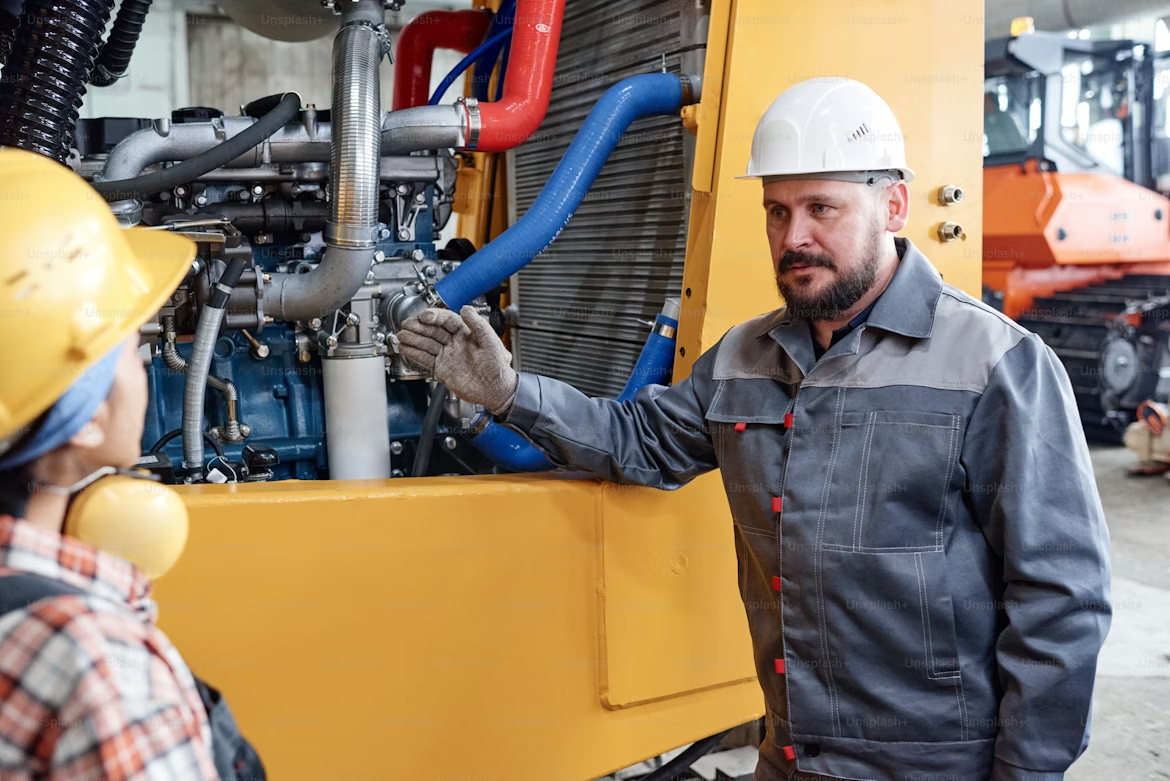
Fuel prices have a way of quietly reshaping everyday decisions. You notice it when a short trip suddenly feels expensive, or when your monthly budget starts tightening without warning. For many drivers—especially those using small cars, motorbikes, or compact vehicles—the difference between efficient and inefficient fuel use often comes down to maintenance rather than engine size or brand.
What’s interesting is that most fuel-saving advice focuses on driving habits. While that matters, the mechanical condition of your vehicle plays an equally powerful role. A well-maintained engine doesn’t just perform better—it burns fuel more cleanly, wastes less energy, and ultimately costs less to run.
This article explores ten smart, practical maintenance tips that directly impact fuel economy. These aren’t complicated upgrades or expensive modifications. Instead, they are small, consistent actions that—when combined—can lead to significant savings over time.
understanding how maintenance affects fuel consumption
Before diving into specific tips, it helps to understand the connection between maintenance and fuel usage.
An internal combustion engine works by mixing air and fuel in precise ratios. When components such as filters, spark plugs, or tires are not in optimal condition, this balance is disrupted. The engine compensates by using more fuel to produce the same amount of power.
key maintenance-related factors affecting fuel economy:
| component | role in efficiency | impact if neglected |
|---|---|---|
| air filter | regulates clean airflow | reduced combustion quality |
| engine oil | reduces friction | energy loss |
| spark plugs | ignites fuel-air mixture | incomplete combustion |
| tires | affect rolling resistance | increased drag |
| fuel system | delivers fuel efficiently | uneven fuel usage |
Even minor inefficiencies in these systems can add up over weeks and months.
tip 1: keep the air filter clean
The air filter is often overlooked, yet it plays a crucial role in engine performance.
A clogged air filter restricts airflow, forcing the engine to work harder. This leads to a richer fuel mixture—meaning more fuel is burned than necessary.
impact of air filter condition:
| air filter condition | airflow level | fuel efficiency |
|---|---|---|
| clean | optimal | high |
| slightly dirty | moderate | reduced |
| heavily clogged | poor | significantly reduced |
practical advice:
- Inspect the air filter every 2,000–3,000 km
- Replace it if it appears dark or dusty
- Clean reusable filters properly
A simple filter replacement can improve fuel efficiency by up to 10% in some cases.
tip 2: use the right engine oil
Engine oil does more than just lubricate—it directly affects how efficiently your engine runs.
Using oil that is too thick or too old increases internal resistance. The engine has to expend more energy overcoming friction, which leads to higher fuel consumption.
engine oil comparison:
| oil condition | engine friction | fuel usage |
|---|---|---|
| fresh, correct grade | low | optimal |
| old oil | high | increased |
| incorrect grade | variable | inefficient |
maintenance tips:
- Follow manufacturer recommendations
- Change oil regularly (usually every 1000–3000 km for bikes)
- Avoid mixing different oil grades
Clean oil keeps the engine running smoothly and efficiently.
tip 3: maintain proper tire pressure
Tires are the only point of contact between your vehicle and the road. Their condition significantly affects fuel consumption.
When tires are under-inflated, they create more resistance, forcing the engine to use more fuel.
fuel efficiency vs tire pressure:
| tire pressure level | rolling resistance | fuel efficiency |
|---|---|---|
| correct | low | optimal |
| 10% under | moderate | reduced |
| 20% under | high | poor |
best practices:
- Check tire pressure weekly
- Inflate according to recommended PSI
- Monitor for slow leaks
This is one of the easiest and fastest ways to improve mileage.
tip 4: replace worn spark plugs
Spark plugs are small components with a big impact. They ignite the fuel-air mixture inside the engine.
Worn or dirty spark plugs lead to incomplete combustion, which wastes fuel.
spark plug condition effects:
| spark plug state | combustion quality | fuel usage |
|---|---|---|
| new | efficient | low |
| worn | inconsistent | higher |
| fouled | poor | much higher |
maintenance guidance:
- Replace spark plugs every 3000–8000 km
- Check for carbon buildup
- Use recommended plug types
A healthy spark ensures every drop of fuel is used effectively.
tip 5: keep the fuel system clean
Over time, dirt and deposits can accumulate in the fuel system. This affects fuel delivery and combustion.
fuel system cleanliness impact:
| system condition | fuel delivery | efficiency |
|---|---|---|
| clean | smooth | optimal |
| partially clogged | uneven | reduced |
| heavily clogged | poor | inefficient |
maintenance tips:
- Use quality fuel
- Add fuel system cleaner occasionally
- Service injectors or carburetor when needed
A clean system ensures consistent fuel flow.
tip 6: align and balance your wheels
Wheel alignment is not just about comfort—it also affects fuel consumption.
Misaligned wheels create drag, forcing the engine to work harder.
alignment impact:
| alignment condition | vehicle movement | fuel usage |
|---|---|---|
| proper | smooth | efficient |
| slightly off | uneven drag | increased |
| poor alignment | heavy resistance | high |
recommendations:
- Check alignment every few months
- Inspect after hitting potholes
- Balance wheels regularly
Proper alignment improves both efficiency and safety.
tip 7: service the cooling system
An overheated engine loses efficiency quickly. The cooling system ensures the engine operates within the ideal temperature range.
temperature vs efficiency:
| engine temperature | performance | fuel consumption |
|---|---|---|
| optimal | stable | efficient |
| slightly high | reduced | increased |
| overheating | poor | very high |
maintenance tips:
- Check coolant levels regularly
- Inspect radiator and hoses
- Avoid riding with overheating issues
A stable engine temperature supports efficient combustion.
tip 8: inspect and lubricate moving parts
Friction is the enemy of efficiency. Components like chains, bearings, and joints must move smoothly.
friction impact on fuel use:
| condition | friction level | fuel efficiency |
|---|---|---|
| well-lubricated | low | high |
| dry | moderate | reduced |
| rusty | high | poor |
what to do:
- Lubricate chains weekly (for bikes)
- Check moving parts for wear
- Replace damaged components
Reducing friction improves overall performance.
tip 9: monitor battery and electrical systems
Electrical systems indirectly affect fuel consumption. A weak battery or faulty alternator can increase engine load.
electrical efficiency impact:
| system condition | engine load | fuel usage |
|---|---|---|
| healthy | normal | optimal |
| weak battery | higher | increased |
| faulty system | unstable | inefficient |
maintenance advice:
- Check battery health regularly
- Ensure proper charging
- Replace old batteries
Even small electrical inefficiencies can add up.
tip 10: follow a consistent maintenance schedule
Consistency is the key to long-term fuel savings. Irregular maintenance leads to gradual performance decline.
maintenance frequency guide:
| component | recommended interval |
|---|---|
| engine oil | 1000–3000 km |
| air filter | 2000–3000 km |
| spark plugs | 3000–8000 km |
| tire pressure | weekly |
| full service | every 3–6 months |
keeping a simple log can help:
| date | service done | next due |
|---|---|---|
| jan 10 | oil change | feb 20 |
| feb 15 | air filter cleaned | mar 30 |
Regular attention prevents small issues from becoming expensive problems.
combined savings potential
When all maintenance practices are followed, the cumulative impact can be significant.
estimated savings breakdown:
| maintenance area | fuel savings potential |
|---|---|
| air filter | 5–10% |
| engine oil | 2–5% |
| tire pressure | 3–5% |
| spark plugs | 3–7% |
| fuel system | 5–10% |
total possible improvement: 15–30% reduction in fuel consumption
real-world scenario
Imagine a small vehicle that normally consumes 1 liter of fuel for 40 km.
| condition | distance per liter |
|---|---|
| poorly maintained | 32–35 km |
| average maintenance | 40 km |
| well maintained | 45–50 km |
Over a month, this difference can translate into noticeable savings.
long-term financial impact
Let’s look at a simplified yearly comparison:
| condition | monthly fuel cost | yearly cost |
|---|---|---|
| inefficient | $100 | $1200 |
| efficient | $75 | $900 |
annual savings: $300
For many users, this is equivalent to multiple maintenance services—essentially paying for itself.
common mistakes to avoid
| mistake | consequence |
|---|---|
| delaying oil changes | increased wear and fuel use |
| ignoring warning signs | costly repairs |
| using cheap, low-quality parts | reduced efficiency |
| skipping regular inspections | hidden issues |
Avoiding these mistakes is just as important as following good practices.
faqs
- how often should I service my vehicle for best fuel efficiency?
A basic check every 2–4 weeks and a full service every 3–6 months is ideal, depending on usage. - can poor maintenance really increase fuel consumption that much?
Yes. In extreme cases, poor maintenance can increase fuel usage by 20–30%. - is it worth spending money on maintenance to save fuel?
Absolutely. The savings from improved fuel efficiency usually outweigh maintenance costs over time. - does cleaning the fuel system make a noticeable difference?
Yes. A clean fuel system improves combustion and engine response, which reduces fuel waste. - can I do these maintenance tasks myself?
Some tasks like checking tire pressure or cleaning filters can be done at home, but others may require a professional mechanic. - what is the fastest way to improve fuel efficiency immediately?
Start with tire pressure, air filter cleaning, and proper engine oil—these provide quick and noticeable results.
final thoughts
Fuel efficiency isn’t just about driving less—it’s about driving smarter and maintaining your vehicle with intention. The difference between a neglected machine and a well-maintained one is not just performance, but cost, reliability, and longevity.
These ten maintenance tips are not complicated, but they require consistency. Over time, they become habits—and those habits translate into real savings.