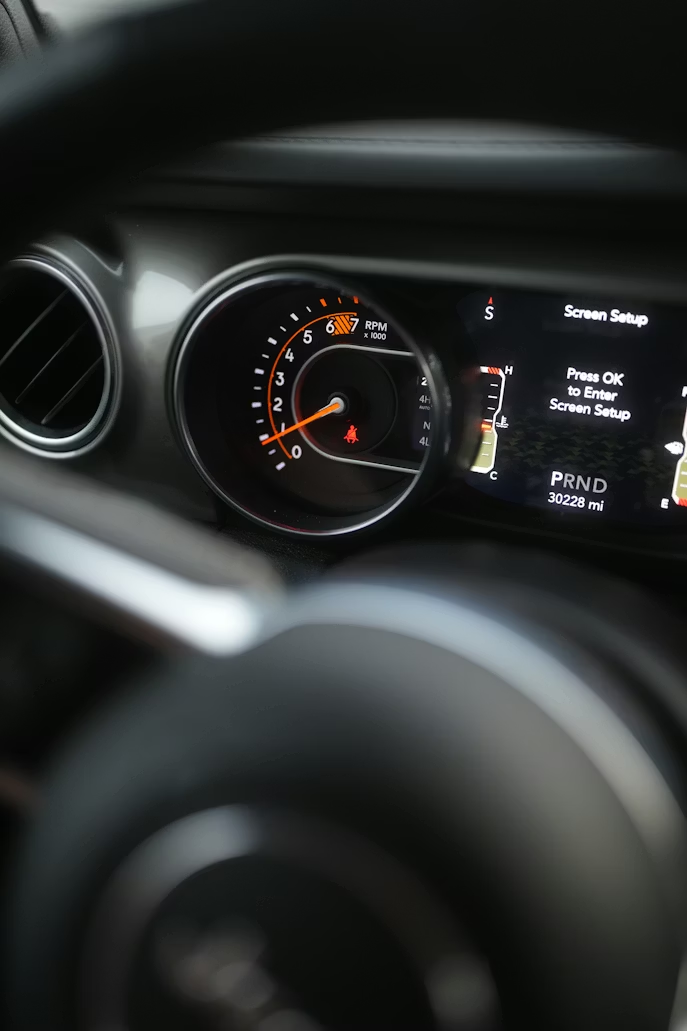
There’s a certain kind of frustration that comes with watching your fuel gauge drop faster than expected. It’s not dramatic, not sudden—just a steady decline that makes you wonder where all that fuel is going. For a long time, I assumed it was just part of driving. Traffic, road conditions, maybe even bad fuel quality. It never really occurred to me that most of the problem was sitting right behind the wheel.
What changed wasn’t a single discovery. It was a series of small realizations—often learned through trial, error, and a bit of regret. Some came after long drives that cost more than they should have. Others came after noticing patterns I had ignored for years.
These are nine fuel-saving techniques I didn’t learn from a manual or a mechanic, but from experience. And if there’s one thing I wish I could do, it’s go back and start using them earlier.
Smooth Acceleration: The Habit That Took Time to Break
I used to think acceleration didn’t matter much. Press the pedal, get up to speed, and move on. It felt natural. What I didn’t realize was how much fuel those quick bursts of speed were consuming.
Every time you accelerate aggressively, the engine demands more fuel than necessary. It’s not just about speed—it’s about how quickly you get there.
Once I started accelerating gradually, the difference was noticeable. The car felt calmer, and fuel usage became more consistent.
Acceleration impact on fuel usage:
| Acceleration Style | Fuel Consumption | Driving Experience |
|---|---|---|
| Aggressive | High | Jerky, unpredictable |
| Moderate | Medium | Balanced |
| Smooth | Low | Stable, controlled |
It took conscious effort at first, but eventually it became second nature.
Maintaining Consistent Speed
Speed itself isn’t always the problem—fluctuation is. Constantly speeding up and slowing down wastes more fuel than maintaining a steady pace.
I noticed this most during highway driving. Even small variations in speed added up over time.
Once I focused on keeping a consistent speed, fuel efficiency improved without any major changes.
Speed consistency comparison:
| Driving Pattern | Fuel Efficiency |
| Frequent changes | Low |
| Occasional variation | Moderate |
| Constant speed | High |
It sounds simple, but it requires attention. The road, traffic, and even your own habits can disrupt that consistency.
Reducing Unnecessary Idling
There was a time I didn’t think twice about leaving the engine running—waiting for someone, sitting in traffic, or even checking my phone.
What I didn’t realize was how much fuel was being wasted during those idle moments.
An idling engine still consumes fuel, even though the car isn’t moving. Over time, those minutes add up.
Idle time vs fuel waste:
| Idle Duration | Fuel Wasted (Approx.) |
| 5 minutes | Low |
| 15 minutes | Moderate |
| 30+ minutes | High |
Turning off the engine during longer stops became a simple but effective habit.
Proper Tire Maintenance
This one surprised me the most because it felt so minor at first.
Driving with underinflated tires increases resistance, making the engine work harder. The effect isn’t obvious while driving, but it’s very real.
Once I started checking tire pressure regularly, I noticed smoother movement and better mileage.
Tire condition impact:
| Tire State | Rolling Resistance | Fuel Usage |
| Properly inflated | Low | Lower |
| Slightly low | Moderate | Higher |
| Severely low | High | Much higher |
It’s one of those things that takes very little effort but delivers consistent results.
Avoiding Excess Weight
At one point, my car had become a storage space. Tools, bags, random items—things I didn’t need but never removed.
Extra weight forces the engine to use more fuel. It’s a simple concept, but easy to overlook.
After clearing out unnecessary items, the difference wasn’t dramatic, but it was there.
Weight vs efficiency:
| Extra Load | Fuel Impact |
| Minimal | None |
| Moderate | Slight |
| Heavy | Noticeable |
It’s not about stripping the car down completely—just avoiding unnecessary load.
Using Air Conditioning Wisely
Hot weather makes air conditioning almost unavoidable. I used to run it at maximum without thinking twice.
What I learned is that AC systems place an additional load on the engine, increasing fuel consumption.
Switching to moderate settings and using ventilation when possible made a difference.
AC usage comparison:
| AC Setting | Fuel Impact |
| Maximum | High |
| Moderate | Medium |
| Minimal/Off | Low |
It’s about balance—comfort without unnecessary strain on the engine.
Planning Routes Ahead of Time
This was one of the more practical lessons.
Taking longer routes, getting stuck in traffic, or making unnecessary detours all increase fuel usage. It sounds obvious, but it wasn’t something I actively thought about.
Using navigation tools to plan efficient routes helped reduce wasted time and fuel.
Route efficiency impact:
| Route Type | Fuel Usage |
| Direct | Low |
| Slightly longer | Moderate |
| Congested | High |
A few minutes of planning often saved much more in the long run.
Regular Engine Maintenance
Skipping maintenance is easy when the car seems to be running fine. I’ve done it more times than I’d like to admit.
But small issues—dirty filters, worn spark plugs, old oil—can reduce efficiency without obvious symptoms.
Keeping the engine in good condition made everything feel smoother and more efficient.
Maintenance effect:
| Engine Condition | Efficiency |
| Well-maintained | High |
| Slightly worn | Moderate |
| Poor condition | Low |
It’s not just about avoiding breakdowns—it’s about maintaining performance.
Driving with Anticipation
This might be the most subtle technique, but also one of the most effective.
Instead of reacting to traffic, I started anticipating it. Slowing down gradually, avoiding sudden stops, and reading the road ahead.
This reduced unnecessary braking and acceleration, both of which consume fuel.
Driving style comparison:
| Driving Approach | Fuel Efficiency |
| Reactive | Low |
| Partially aware | Moderate |
| Anticipative | High |
It’s less about speed and more about awareness.
Bringing It All Together
Each of these techniques works on its own, but the real improvement comes when they’re combined.
When smooth acceleration, consistent speed, proper maintenance, and smart habits all come together, the difference becomes clear.
Combined impact:
| Number of Techniques Used | Overall Fuel Savings |
| 1–2 | Small |
| 3–5 | Moderate |
| 6–9 | Significant |
What stands out is how simple most of these changes are. They don’t require expensive tools or major effort—just awareness and consistency.
FAQs
- Which technique has the biggest impact on fuel savings?
Smooth acceleration and maintaining consistent speed tend to have the most immediate and noticeable effects. - Is it better to turn off the engine during short stops?
For very short stops, it may not make a big difference, but for longer waits, turning off the engine can save fuel. - Does driving slower always save fuel?
Not necessarily. Extremely low speeds can be inefficient. The goal is steady, moderate speed rather than simply driving slower. - How often should I check tire pressure?
Ideally every two weeks, and before long trips. Temperature changes can also affect tire pressure. - Can bad driving habits really make a big difference?
Yes, driving habits play a major role in fuel consumption. Small changes in behavior can lead to noticeable savings over time. - Are these techniques suitable for all types of cars?
Yes, these techniques apply to most vehicles, whether manual or automatic, old or new.
In the end, fuel efficiency isn’t about perfection. It’s about awareness. Most of these lessons came from doing things the wrong way first. But once you recognize the patterns, the improvements come naturally—and the savings follow.