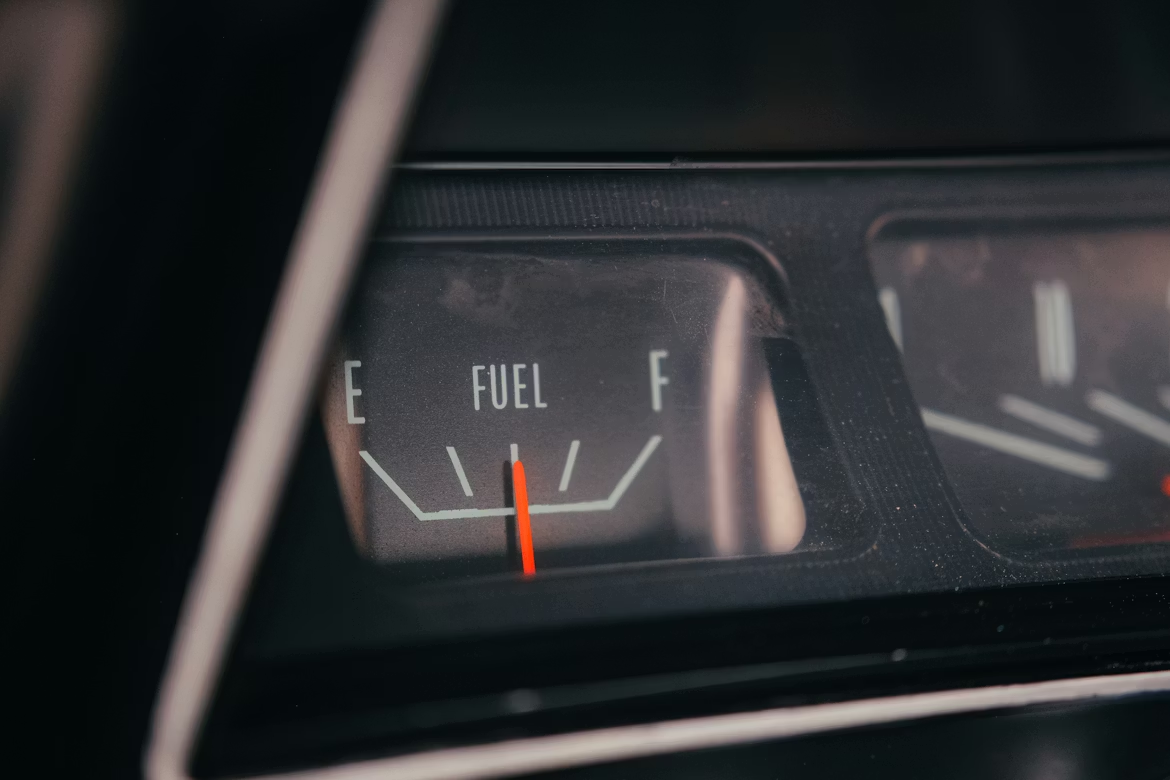
Fuel efficiency is often treated like a fixed number—something printed on a car’s specification sheet and accepted as-is. But in reality, mileage is far more flexible than most drivers realize. The way you drive, maintain your vehicle, and use available tools can significantly influence how far each liter of fuel actually takes you.
What makes this especially interesting is that you don’t need expensive upgrades or technical expertise to see results. With a handful of well-applied techniques, supported by simple technology and consistent habits, it’s possible to stretch fuel usage further than you might expect.
This article explores five powerful fuel-saving techniques that focus on maximizing mileage in practical, sustainable ways. These aren’t quick tricks—they’re systems you can integrate into everyday driving for long-term gains.
understanding mileage beyond the basics
Mileage is not just about engine efficiency. It’s the result of multiple interacting factors:
- driving style
- road conditions
- vehicle load
- maintenance quality
- environmental factors
Even small inefficiencies in these areas can reduce mileage significantly over time.
table: factors affecting mileage
| factor | impact level | controllability |
|---|---|---|
| driving habits | very high | high |
| tire condition | high | very high |
| traffic conditions | medium | medium |
| vehicle maintenance | high | high |
| vehicle weight | medium | high |
The techniques ahead are designed to target these factors directly.
technique 1: controlled acceleration and momentum driving
One of the biggest drains on fuel is aggressive acceleration. Rapid speed increases require a surge of fuel, often more than necessary.
Controlled acceleration is about building speed gradually and maintaining momentum rather than constantly speeding up and slowing down.
how it works:
When you accelerate smoothly:
- the engine operates more efficiently
- fuel injection remains steady
- less energy is wasted
table: acceleration styles vs fuel consumption
| acceleration type | fuel usage |
|---|---|
| aggressive | high |
| moderate | medium |
| smooth | low |
momentum driving concept:
Instead of braking frequently, anticipate traffic flow. If a red light is ahead, ease off the accelerator early instead of maintaining speed and braking hard.
chart: braking frequency vs fuel efficiency
| braking frequency | efficiency level |
|---|---|
| frequent | low |
| occasional | medium |
| minimal | high |
real-world example:
A driver commuting in city traffic who adopts smoother acceleration and anticipates stops can improve mileage by 10–20% without any hardware changes.
technique 2: maintaining optimal tire pressure and alignment
Tires play a bigger role in fuel efficiency than many drivers realize. Underinflated tires increase rolling resistance, forcing the engine to work harder.
alignment issues can also cause drag, further reducing efficiency.
table: tire condition vs mileage impact
| tire condition | mileage impact |
|---|---|
| properly inflated | optimal |
| slightly underinflated | -2% to -3% |
| poorly inflated | -5% to -10% |
| misaligned | -5% or more |
why it matters:
Every rotation of the tire requires energy. When resistance increases, fuel consumption rises accordingly.
practical tips:
- check tire pressure every 2–3 weeks
- adjust pressure based on manufacturer recommendations
- align wheels periodically
chart: tire pressure drop vs fuel loss
| pressure drop | fuel loss |
|---|---|
| 5 psi | ~2% |
| 10 psi | ~5% |
| 15 psi | ~8–10% |
technique 3: smart route planning and traffic avoidance
Not all routes are equal—even if they appear similar in distance. Traffic conditions, road quality, and stop frequency all influence fuel consumption.
smart route planning focuses on minimizing:
- stop-and-go traffic
- unnecessary detours
- idle time
table: route type comparison
| route type | time | fuel usage |
|---|---|---|
| shortest distance | medium | medium |
| fastest route | low | lower |
| congested route | high | highest |
why it works:
Engines consume fuel inefficiently when frequently stopping and starting. A slightly longer but smoother route can use less fuel overall.
chart: idle time vs fuel consumption
| idle time (minutes) | fuel wasted |
|---|---|
| 5 | moderate |
| 10 | high |
| 20 | very high |
real-world insight:
Drivers who actively avoid peak traffic hours or use navigation tools to find efficient routes often see immediate mileage improvements.
technique 4: reducing vehicle weight and drag
Every extra kilogram in your vehicle requires additional energy to move. While the effect may seem small, it accumulates over time.
common sources of excess weight:
- unused tools
- heavy accessories
- roof racks
- storage clutter
table: weight reduction vs mileage gain
| weight removed | mileage improvement |
|---|---|
| 10 kg | ~1% |
| 25 kg | ~2–3% |
| 50 kg | ~4–5% |
aerodynamic drag:
At higher speeds, air resistance becomes a major factor. Roof-mounted items and open windows can increase drag.
chart: speed vs drag impact
| speed (km/h) | drag effect |
|---|---|
| 50 | low |
| 80 | moderate |
| 100+ | high |
practical adjustments:
- remove roof racks when not in use
- keep windows closed at high speeds
- organize trunk space
technique 5: consistent vehicle maintenance and engine care
A well-maintained vehicle runs more efficiently. Small issues, if ignored, can lead to increased fuel consumption.
key maintenance areas:
- engine oil quality
- air filter cleanliness
- spark plugs
- fuel injectors
table: maintenance factor vs fuel efficiency
| component | condition | fuel impact |
|---|---|---|
| air filter | clean | optimal |
| air filter | clogged | -5–10% |
| engine oil | fresh | efficient |
| engine oil | degraded | reduced |
why it matters:
Engines rely on precise air-fuel mixtures. Any disruption—such as a clogged filter—reduces efficiency.
chart: maintenance delay vs efficiency loss
| delay duration | efficiency loss |
|---|---|
| 1–2 months | minimal |
| 3–6 months | moderate |
| 6+ months | significant |
combined impact of all techniques
Individually, each technique offers measurable benefits. Combined, they create a powerful system for maximizing mileage.
table: combined efficiency gains
| techniques applied | estimated mileage gain |
|---|---|
| one technique | 5–10% |
| two techniques | 10–20% |
| three techniques | 15–25% |
| all five techniques | 25–40% |
example scenario:
A driver averaging 12 km per liter improves efficiency by 25%.
new mileage: 15 km per liter
If they drive 1,000 km monthly:
- fuel used before: ~83 liters
- fuel used after: ~67 liters
monthly savings: 16 liters
long-term financial impact
| period | fuel savings (liters) | cost savings (example) |
|---|---|---|
| monthly | 16 | moderate |
| yearly | 192 | significant |
choosing the right approach
Different drivers benefit from different techniques.
city drivers:
- focus on smooth acceleration
- reduce idling
- plan routes carefully
highway drivers:
- maintain steady speed
- reduce drag
- monitor tire pressure
mixed drivers:
- combine all techniques for best results
common mistakes to avoid
- accelerating aggressively out of habit
- ignoring minor maintenance issues
- assuming shorter routes are always better
- carrying unnecessary weight
- neglecting tire pressure checks
fuel-saving techniques require consistency more than complexity.
long-term benefits beyond fuel savings
Maximizing mileage also leads to:
- reduced engine wear
- lower maintenance costs
- longer vehicle lifespan
- improved driving comfort
- reduced environmental impact
These benefits compound over time, making the effort worthwhile.
frequently asked questions
- what is the most effective fuel-saving technique?
Controlled acceleration and maintaining steady speed tend to deliver the highest immediate impact. - how quickly can i improve my mileage?
Some changes, like adjusting tire pressure or driving style, can show results within a few days. - does vehicle weight really affect fuel efficiency?
Yes. Even small reductions improve mileage because the engine works less to move the vehicle. - is maintenance really that important for fuel savings?
Absolutely. Poor maintenance can reduce fuel efficiency by up to 10–15%. - can i combine all five techniques safely?
Yes, and doing so provides the best results without any negative impact on the vehicle. - do these techniques work for all vehicles?
They apply to most internal combustion vehicles, though results may vary depending on the model and condition.
final thoughts
Maximizing mileage isn’t about one dramatic change—it’s about refining how you drive and how your vehicle operates. The techniques outlined here are simple, practical, and highly effective when used consistently.
What makes them powerful is their cumulative effect. Each improvement builds on the others, gradually transforming your driving efficiency. Over time, the savings become more than noticeable—they become a natural part of your routine.
In the end, fuel efficiency is less about technology alone and more about awareness, discipline, and smart choices. When these elements come together, every journey becomes more economical, and every drop of fuel goes further than before.