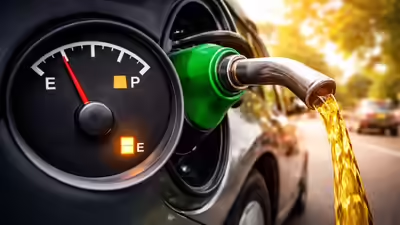
Most drivers believe fuel efficiency is tied mainly to the car they drive. Engine size, fuel type, and brand reputation often take the spotlight. Yet, after spending time observing real-world driving patterns, one thing becomes obvious: the biggest fuel losses rarely come from the car—they come from overlooked habits.
These aren’t the usual tips like “drive slower” or “keep your tires inflated.” Those are widely known. The real difference comes from subtle, often ignored techniques that quietly drain fuel day after day.
This article explores six such techniques. They’re not flashy, and they don’t require expensive upgrades. But when applied consistently, they can reshape fuel consumption in ways that feel surprisingly immediate.
how small inefficiencies quietly add up
Fuel waste rarely happens in dramatic bursts. Instead, it accumulates through dozens of micro-decisions made during a single drive.
Here’s a simple breakdown:
| Driving Action | Fuel Impact Level |
|---|---|
| Hard acceleration | High |
| Late braking | Medium-High |
| Idling over 2 minutes | High |
| Inconsistent speed | Medium |
| Short cold trips | Medium-High |
Individually, these don’t seem significant. Combined over days and weeks, they can reduce efficiency by 15–25%.
technique 1: mastering the “first 5 minutes” of driving
What most drivers do
Start the car and drive normally, sometimes aggressively, even when the engine is still cold.
What actually happens
During the first few minutes, the engine operates less efficiently. Fuel combustion isn’t optimal, and internal components haven’t reached ideal temperature.
The overlooked technique
Drive gently for the first 5 minutes—gradual acceleration, low RPM, and minimal load.
real-world comparison:
| Driving Style (First 5 Min) | Fuel Efficiency Impact |
|---|---|
| Aggressive Start | −10% overall trip |
| Gentle Warm-Up | Baseline or improved |
Why it works
Cold engines consume more fuel. Reducing strain during this phase minimizes excess consumption.
practical tip
Imagine there’s a fragile object under your accelerator for the first few minutes. It naturally limits harsh input.
technique 2: timing traffic lights instead of racing them
What most drivers do
Accelerate quickly toward a red light, then brake hard.
What actually happens
Fuel is burned to gain speed, only to be wasted when braking.
The overlooked technique
Observe traffic signals ahead and adjust speed to arrive just as the light changes.
efficiency comparison:
| Approach Style | Fuel Usage |
|---|---|
| Accelerate + Brake | High |
| Glide + Time Arrival | Low |
Why it works
Maintaining momentum is far more efficient than stopping and restarting.
realistic outcome
Even reducing 3–4 full stops per trip can noticeably improve mileage.
technique 3: using “rolling momentum” in traffic
What most drivers do
Constantly stop completely, even in slow-moving traffic.
What actually happens
Every full stop requires more fuel to get moving again.
The overlooked technique
Maintain a slow rolling motion instead of stopping completely when safe.
traffic flow comparison:
| Movement Pattern | Fuel Efficiency |
|---|---|
| Stop-Go Driving | Lower |
| Rolling Movement | Higher |
Why it works
Cars use the most fuel during initial acceleration. Avoiding full stops reduces repeated fuel spikes.
caution
This should always be done safely, maintaining proper distance and awareness.
technique 4: minimizing “hidden idling”
What most drivers do
Leave the engine running during short waits—parking, pickups, quick stops.
What actually happens
Fuel is consumed without any distance covered.
The overlooked technique
Turn off the engine if you expect to be stationary for more than 30–60 seconds.
idle consumption estimate:
| Idle Duration | Fuel Wasted |
|---|---|
| 1 minute | Small |
| 10 minutes | Significant |
| 30 minutes | Very High |
Why it works
Modern engines don’t require long idle periods. Restarting uses less fuel than prolonged idling.
bonus insight
Air conditioning often encourages idling, especially in hot climates. Managing cabin temperature before stopping can reduce this habit.
technique 5: reducing “speed fluctuation fatigue”
What most drivers do
Constantly adjust speed—accelerating, slowing down, then accelerating again.
What actually happens
Each fluctuation creates inefficiency, even if speeds remain within limits.
The overlooked technique
Maintain a steady speed as much as possible.
speed consistency chart:
| Driving Style | Efficiency Level |
|---|---|
| Fluctuating Speed | Low |
| Consistent Speed | High |
Why it works
Engines operate most efficiently at stable speeds. Variations increase fuel demand.
practical application
On open roads, imagine setting an invisible “speed band” and staying within it.
technique 6: managing short trips strategically
What most drivers do
Use the car for multiple short trips throughout the day.
What actually happens
Each trip starts with a cold engine, increasing fuel consumption.
The overlooked technique
Combine errands into a single trip whenever possible.
trip comparison:
| Trip Type | Fuel Efficiency |
|---|---|
| Multiple Short Trips | Lower |
| One Combined Trip | Higher |
Why it works
Warm engines operate more efficiently. Reducing repeated cold starts saves fuel.
real-world impact
Combining just two trips per day can lead to noticeable weekly savings.
combined impact of these techniques
Individually, each technique offers modest improvements. Combined, the effect becomes significant.
estimated savings:
| Technique Applied | Efficiency Gain |
|---|---|
| One Technique Only | 3–5% |
| Three Techniques Combined | 8–12% |
| All Six Techniques Consistently | 15–25% |
This level of improvement rivals some mechanical upgrades—without any cost.
monthly savings illustration
| Monthly Fuel Spend | 10% Savings | 20% Savings |
|---|---|---|
| $100 | $10 | $20 |
| $250 | $25 | $50 |
| $400 | $40 | $80 |
Over a year, these savings become substantial, especially considering no investment is required.
why drivers ignore these techniques
It’s not that these methods are unknown—it’s that they’re easy to overlook.
common reasons:
- Habits feel automatic and hard to change
- Immediate benefits aren’t always visible
- Driving is often rushed or reactive
- Focus is placed on destination, not efficiency
Behavioral inertia is powerful. Once a driving style is established, it tends to persist.
how to build fuel-efficient habits
Changing driving behavior doesn’t happen overnight. It requires awareness and repetition.
simple strategy:
step 1: focus on one technique at a time
Trying to change everything at once rarely works.
step 2: track small wins
Notice smoother drives, fewer stops, or reduced fuel usage.
step 3: create mental triggers
For example, every red light becomes a reminder to glide instead of race.
step 4: reinforce consistency
Over time, efficient driving becomes the default, not the exception.
unexpected benefits beyond fuel savings
While the goal is fuel efficiency, these techniques bring additional advantages:
- Reduced wear on brakes and tires
- Smoother driving experience
- Lower stress during traffic
- Improved safety due to better anticipation
In many ways, fuel-saving driving overlaps with defensive driving.
long-term perspective
Fuel efficiency isn’t just about cutting costs—it’s about reducing waste. Every unnecessary acceleration, every prolonged idle, every short inefficient trip contributes to avoidable consumption.
Over months and years, small improvements compound into meaningful change.
final reflections
The most powerful fuel-saving techniques are often the ones that cost nothing and require no installation. They exist in the space between intention and habit.
What makes them “secret” isn’t their complexity—it’s how easily they’re ignored.
Once you start noticing these patterns, driving changes. It becomes smoother, more deliberate, and surprisingly more efficient. And the best part? The savings follow naturally.
frequently asked questions
- Do these techniques really make a noticeable difference?
Yes. When applied consistently, they can improve fuel efficiency by 10–25%, depending on driving conditions. - Which technique should I start with?
Start with minimizing idling and maintaining steady speed. These are the easiest to implement and show quick results. - Are these techniques suitable for all cars?
Yes, they apply to both manual and automatic vehicles, regardless of engine type. - How long does it take to see results?
You may notice changes within a few days, especially in smoother driving and reduced fuel usage. - Do these techniques affect travel time?
In most cases, no. Efficient driving often results in smoother flow rather than slower travel. - Can these techniques replace fuel-saving devices?
They can significantly reduce the need for devices, but combining both approaches yields the best results.
In the end, fuel savings are less about what you install and more about what you change. And sometimes, the smallest shifts make the biggest difference.