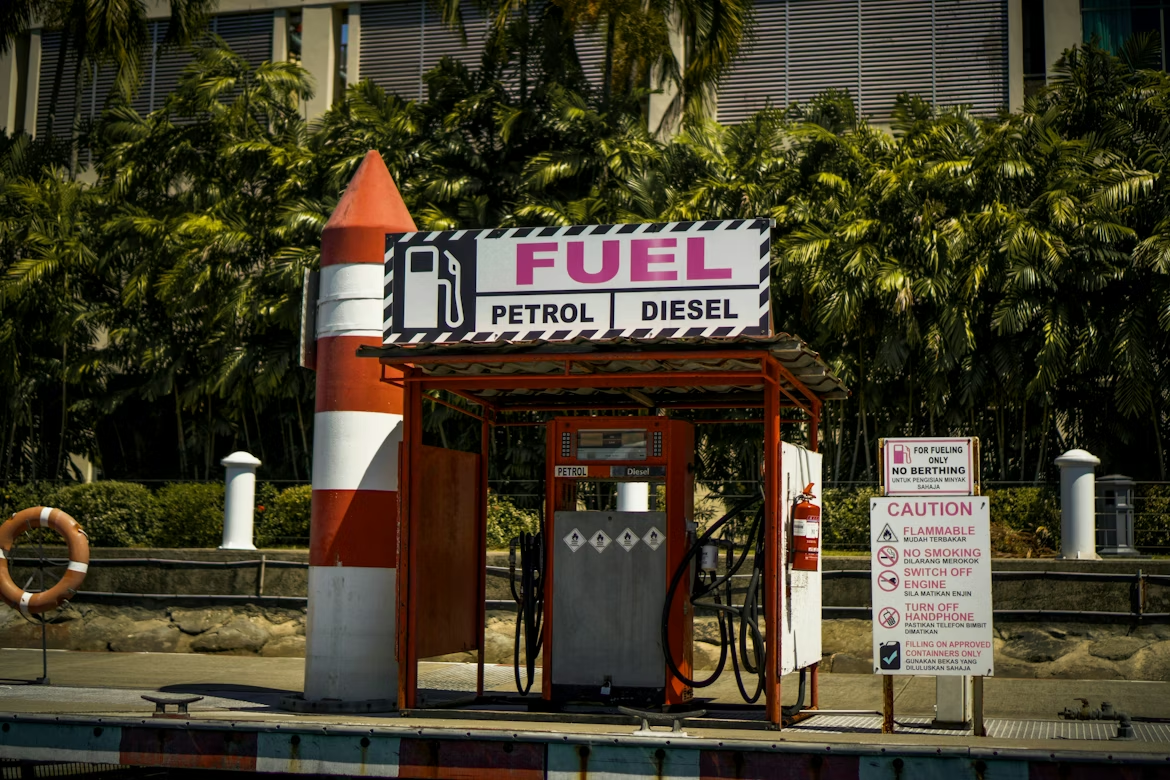
Fuel efficiency isn’t just a buzzword anymore—it’s a practical necessity. Whether you’re commuting daily, running a business that depends on transportation, or planning long road trips, the cost of fuel has a direct impact on your finances. While modern vehicles come equipped with advanced technologies, experts consistently emphasize that the biggest gains in fuel efficiency often come from simple, proven techniques rather than expensive upgrades.
These techniques are not theoretical. They are based on real-world observations, mechanical principles, and years of driving experience. Many of them require no investment at all—just awareness and consistency. Others involve minor adjustments that quickly pay for themselves.
In this article, we’ll explore ten fuel-saving techniques that experts rely on. Along the way, you’ll find practical tables, comparisons, and structured insights that go beyond general advice and show you how to apply these methods in everyday driving.
understanding where fuel is lost
Before diving into the techniques, it’s important to understand how fuel is typically wasted. Many drivers assume fuel usage is proportional only to distance, but in reality, inefficiencies occur constantly during a trip.
table: hidden fuel loss factors
| Factor | Fuel Impact |
|---|---|
| Rapid acceleration | +20–30% usage |
| High-speed driving | +10–20% usage |
| Poor tire pressure | +3–5% usage |
| Engine idling | +10% usage |
| Carrying excess weight | +2–8% usage |
Once you recognize these patterns, the techniques below become easier to understand and apply.
- maintain steady speeds
One of the most widely recommended techniques is maintaining a consistent speed, especially on highways.
why it works
Frequent acceleration and deceleration force the engine to work harder, consuming more fuel. A steady speed minimizes these fluctuations.
practical example
| Driving Style | Fuel Efficiency |
|---|---|
| Fluctuating speed | baseline |
| Steady speed | +10–15% |
how to apply
- use cruise control on highways
- anticipate traffic flow
- avoid unnecessary speed changes
- accelerate smoothly and gradually
Aggressive acceleration is one of the fastest ways to waste fuel.
expert insight
Fuel injection systems deliver more fuel during rapid acceleration. Smooth acceleration allows the engine to operate more efficiently.
comparison chart
| Acceleration Style | Fuel Consumption |
|---|---|
| Aggressive | high |
| Moderate | medium |
| Smooth | low |
daily habit tip
Imagine there’s a cup of water on your dashboard—accelerate gently enough not to spill it.
- keep tires properly inflated
This is a simple yet powerful technique that experts never ignore.
why it matters
Underinflated tires increase rolling resistance, forcing the engine to burn more fuel.
efficiency chart
| Tire Pressure Level | Fuel Efficiency |
|---|---|
| Optimal | 100% |
| Slightly low | -2% |
| Very low | -5% or more |
routine recommendation
Check tire pressure at least once a week, especially before long drives.
- reduce unnecessary weight
Every extra kilogram in your car requires additional energy to move.
common overlooked items
- unused luggage
- tools not needed daily
- heavy accessories
impact table
| Extra Weight | Fuel Impact |
|---|---|
| 50 kg | +2% |
| 100 kg | +4% |
| 200 kg | +8% |
expert advice
Clean out your car regularly. Treat it like a workspace—only keep what you need.
- limit engine idling
Idling consumes fuel without moving the vehicle.
where it happens
- traffic signals
- waiting in parking areas
- long queues
fuel waste chart
| Idling Time | Fuel Loss |
|---|---|
| 10 minutes | low |
| 20 minutes | moderate |
| 30+ minutes | high |
best practice
If you expect to stop for more than a minute, turning off the engine can save fuel.
- maintain your vehicle regularly
A well-maintained car runs more efficiently.
key maintenance areas
- engine oil
- air filters
- spark plugs
- fuel injectors
maintenance impact
| Condition | Fuel Efficiency |
|---|---|
| Well maintained | optimal |
| Neglected | -10–15% |
expert tip
Regular servicing is not an expense—it’s an investment in fuel savings.
- drive at optimal speeds
Every vehicle has a speed range where fuel efficiency is highest.
general guideline
Most cars achieve optimal efficiency between 60–90 km/h.
speed vs efficiency chart
| Speed Range | Fuel Efficiency |
|---|---|
| 40–60 km/h | moderate |
| 60–90 km/h | optimal |
| 100+ km/h | reduced |
why higher speeds waste fuel
Air resistance increases exponentially with speed, requiring more power and fuel.
- use air conditioning wisely
Air conditioning adds load to the engine, especially at lower speeds.
balanced approach
- use AC on highways (more efficient than open windows)
- limit AC use in slow traffic when possible
comparison table
| Condition | Fuel Impact |
|---|---|
| AC on (city) | +5–10% |
| Windows open (city) | minimal |
| Windows open (highway) | +drag |
expert recommendation
Adjust usage based on driving conditions rather than avoiding AC entirely.
- plan routes in advance
Poor route planning leads to unnecessary fuel consumption.
common issues
- traffic congestion
- longer distances
- frequent stops
planning benefits
| Scenario | Fuel Efficiency |
|---|---|
| Unplanned route | variable |
| Planned route | improved |
practical tip
Choose routes with fewer stops, smoother traffic, and consistent speeds.
- use engine braking and anticipate stops
Anticipating traffic conditions allows you to slow down naturally instead of braking hard.
why it matters
Sudden braking wastes the energy already used to accelerate the vehicle.
driving comparison
| Driving Style | Fuel Efficiency |
|---|---|
| Reactive driving | lower |
| Anticipative | higher |
how to practice
- observe traffic ahead
- ease off the accelerator early
- maintain safe following distance
combined impact of these techniques
Individually, each technique offers modest savings. Combined, they create a powerful effect.
combined savings table
| Techniques Applied | Estimated Savings |
|---|---|
| 2–3 techniques | 5–10% |
| 5–6 techniques | 10–20% |
| All 10 techniques | 20–35% |
real-world example
Let’s consider a driver covering 20,000 km annually.
baseline scenario
| Factor | Value |
|---|---|
| Fuel economy | 12 km/L |
| Fuel used | 1,667 L |
with 20% improvement
| Factor | Value |
|---|---|
| Fuel used | 1,334 L |
| Fuel saved | 333 L |
That’s a significant reduction in fuel costs over time.
daily application checklist
- accelerate gently
- maintain steady speed
- monitor tire pressure
- avoid unnecessary idling
- keep the car light
- follow maintenance schedule
consistency is key
The effectiveness of these techniques depends on how consistently you apply them.
long-term benefits
Beyond saving fuel, these techniques offer additional advantages:
- reduced engine wear
- lower maintenance costs
- safer driving habits
- decreased environmental impact
common misconceptions
myth 1: only new cars can save fuel
Reality: driving behavior matters more than vehicle age.
myth 2: small changes don’t matter
Reality: small daily savings accumulate significantly.
myth 3: fuel efficiency requires expensive tools
Reality: most techniques are free and easy to implement.
frequently asked questions
- which technique provides the fastest results?
Maintaining proper tire pressure and driving smoothly usually show immediate improvements. - can I really save up to 30% fuel?
Yes, when multiple techniques are combined and applied consistently, savings can reach that range. - does driving slower always save fuel?
Not necessarily. Driving too slowly can be inefficient. Staying within the optimal speed range is key. - how often should I check tire pressure?
At least once a week or before long trips. - is turning off the engine at short stops beneficial?
Yes, especially if the stop lasts more than a minute. - do these techniques work for all vehicles?
Yes, they apply to most petrol and diesel vehicles regardless of age.
final thoughts
Fuel-saving doesn’t require drastic lifestyle changes or expensive upgrades. What it does require is awareness and discipline. The techniques outlined here are simple, practical, and proven by experts who understand how vehicles behave under real-world conditions.
What makes them powerful is their cumulative effect. Each small improvement adds up, turning everyday driving into a more efficient and cost-effective experience. Over time, these habits become second nature, and the savings become consistent.
When you approach fuel efficiency as a daily practice rather than a one-time effort, the results are not only noticeable—they’re sustainable.