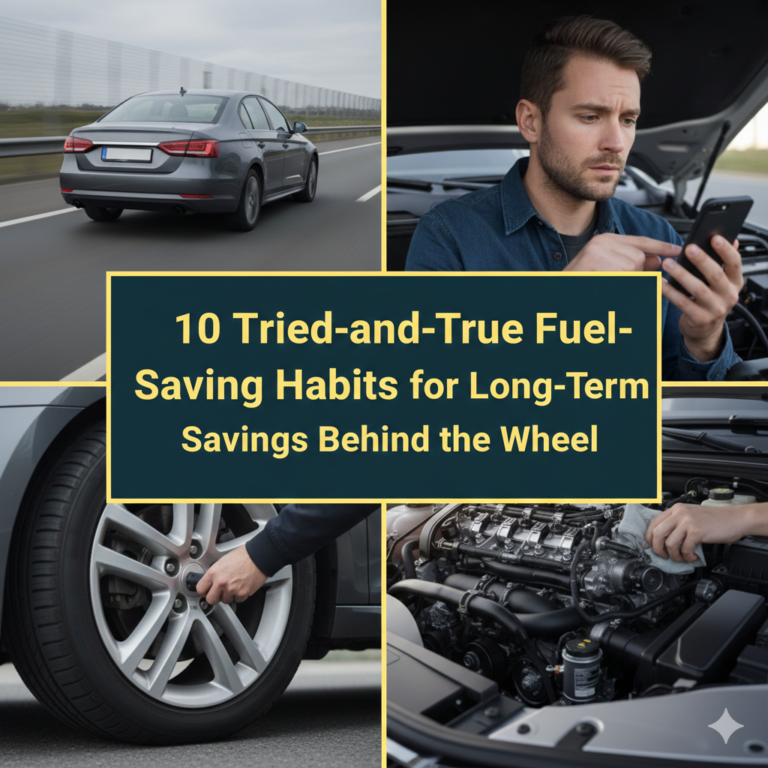
Your Driving Style Matters More Than You Think
Every time you step on the gas, in other words, you are making a decision about how much of your money will come out of your wallet. The majority of drivers are unwittingly driving away as much as 33% of their fuel budget. That’s the equivalent of tossing one out every three dollars you spend at a gas station into the trash.
The good news? You don’t need to buy a new car or install high-tech equipment, either. Some simple adjustments in your driving can put tens of dollars back in your pocket each month. These savings add up fast. Do you spend $200 a month on gasoline? Then better driving habits could save you between $3,000 and $6,000 over the next five years.
This article details ten tried-and-true gas-saving driving habits. There is no magic to these; they’re not some quick fix. They are the kind of tips that actual professional drivers and fuel economy experts employ on a daily basis. Here’s how you can begin saving money on your next trip.
1. Smooth Acceleration—Potentially Saving More Than You Think
Jackrabbit starts are among the biggest fuel wasters on the road. When you stand on the gas pedal starting from a full stop, your engine consumes fuel at a ferocious rate. Think of it like sprinting versus walking — you tire yourself out a whole lot more quickly when you’re sprinting.
The solution is simple: Gradually and steadily, put your foot on the gas. Picture a raw egg under your gas pedal. Press down gently until you would not break it. This trick alone can increase your gas mileage 10-20% around town.
This is what it looks like on the road:
Smooth acceleration:
- 5 to 6 seconds from a dead stop to 30 mph
- Monitor your tachometer and try to stay below 3,000 RPM while accelerating
- Tune in to your engine — if it’s sounding like you’re making it work hard, you’re accelerating too quickly
In the modern car with its instantaneous fuel economy readout, you know exactly how much fuel you’re burning. Keep an eye on that number when you slam the throttle as opposed to tip in slowly. The difference will surprise you.
2. Use the Road Like a Professional
Truckers save thousands of dollars a year driving professionally by reading the road ahead. They look well ahead and slow down before they need to brake. This practice helps them maintain momentum and to not waste money on excessive speed changes.
You can do the same thing. Try to see 10-12 seconds of your driving scene. That’s roughly one city block, or the length of road you’d cover in that amount of time on the highway. Keep an eye out for brake lights, traffic signals and turns.
When you see a red light up ahead, lift your foot off the gas early. Instead of accelerating until the last moment and braking hard to stop, let your car coast down naturally. This method, known as “driving with load,” can cut fuel consumption by 5-10 percent.
Key anticipation strategies:
- When you are in city traffic, be mindful of when to time your arrival so that the lights will be green
- Highway: Anticipate trouble spots early and ease up gradually on the gas
- Leave more room between your car and the one in front so you can coast longer
- Observe the traffic patterns on intersections you pass frequently
3. Maintain Steady Highway Speeds
Speed kills your fuel economy. But not just extreme speeds, wild speed shifts. Every time you speed up and slow down on the highway, you are using more fuel for no good reason.
Here is the math that counts: driving at 75 mph instead of 65 might get you to your destination faster but it cuts fuel economy by 15-20%. The reason is that air resistance rises exponentially with speed. When you’re going pretty quick, your engine has to work a lot harder just to push through the air.
The optimum spot for most cars is 50-60 mph. But the larger lesson is consistency. Love cruise control on flat highways—you always go exactly the same speed without the minuscule variations from your foot.
Speed vs. Fuel Economy Table
| Speed (mph) | Fuel Economy Loss vs. 55 mph |
|---|---|
| 55 | Baseline (0%) |
| 60 | 3-5% worse |
| 65 | 8-12% worse |
| 70 | 15-20% worse |
| 75 | 20-25% worse |
| 80 | 25-35% worse |
One caveat: avoid using cruise control in hilly areas. Your cruise control will accelerate hard going uphill and zoom down the other side at all sorts of speed—both are inefficient in terms of fuel. On inclines, manual speed control works better.
4. Reduce Unnecessary Weight and Drag
For your car, weight is fuel burned. Each additional 100 pounds in your vehicle decreases fuel economy by about 1-2%. That might not seem like a lot, but over time it adds up.
Do a trunk cleanout today. Take out golf clubs, tools, bags of salt and anything else you don’t need for daily driving. That box of books you’ve set aside to donate? It is siphoning away your money with every mile you drive.
Fuel economy, of course, is even worse for external cargo. Roof racks, cargo boxes, and bike racks cause wind resistance that makes your engine work harder. A full roof rack can decrease your fuel efficiency by 15-25 percent on the interstate.
Weight reduction checklist:
- Clear out your trunk only to leave emergency gear in there
- Take down roof racks when they’re not in use (empty ones can cause drag too)
- Clear out the back seat area
- Do not lug full water bottles or cans unless you need them that particular day
- Remove floor mats when the weather is nice, if they’re especially heavy
If you have to pack gear, stick it in a cargo carrier mounted on the rear of your vehicle, not up top. The aerodynamic cost is far lower.
5. Keep Your Tires Properly Inflated
Under-inflated tires can be silent fuel bandits. They add rolling resistance, forcing your engine to work harder to propel your car down the road. According to the Department of Energy, fuel efficiency can be increased up to 3% just by having your tires inflated properly.
Monitor your tire pressure monthly, and always check when tires are cold (you’ve driven less than one mile). The right pressure is indicated on a sticker inside your driver’s door or in your owner’s manual. Do not use the figure printed on the tire’s sidewall; that is the maximum pressure, not the recommended one.
The vast majority of gas stations offer free air pumps. Some of them even have digital displays that can make inflating easy. Buying a personal tire pressure gauge that costs less than $10 pays for itself in gas added to the tank within a month.
Monthly Tire Pressure Impact
| Tire Pressure Status | Fuel Economy Impact | Annual Cost (based on $2,400/year fuel) |
|---|---|---|
| Properly inflated | Baseline | $2,400 |
| 5 PSI under | 1-2% loss | $2,424-$2,448 |
| 10 PSI under | 2-3% loss | $2,448-$2,472 |
| 15 PSI under | 3-5% loss | $2,472-$2,520 |
Bonus tip: You can also get increased fuel economy gains if you over-inflate your tires just a bit (2-3 PSI in excess of the recommended pressure), though it could lead to some sacrifice in tire life and ride comfort.
6. Be Smart About Planning and Combining Your Trips
Engines actually consume a lot more fuel when cold compared to when warm. For the first 5-10 minutes of a trip, your fuel economy can be worse by 40-50%. This is because the sum of several short trips from a cold start will use significantly much more fuel than one combined longer trip.
When making your rounds, consolidate as many of your errands into a single trip as possible. If you have to make stops at the bank, grocery store and post office, try to do them all in one go rather than three.
Think about routing too. The shortest path isn’t necessarily the most fuel-efficient one. The longer route with less traffic, fewer lights and better speed limits might use less fuel than a shorter one with 15 traffic lights.
Smart trip planning tips:
- Combine your errands on your way home from work rather than going back and forth to run each one separately
- Don’t make appointments hours apart and miles away from each other in the same day
- Write a list, so you don’t forget anything and have to go back
- Smart phone GPS apps that indicate traffic will allow you to avoid the crowded routes
- Walk or bike for trips of less than a mile
Studies have shown that running errands mid-morning or mid-afternoon, and not during peak traffic periods, can save 10 percent to 20 percent in fuel costs because you’ll spend less time idling in traffic.
7. Use Air Conditioning Wisely
Air conditioners are convenient, but they don’t come free. Using AC on your drive can lower your fuel economy 5-25%, depending on the outside temperature and how chilly you like it. The effect is most pronounced during urban driving and under very warm conditions.
Here’s the better answer: Drive with your windows down at slow speeds (up to 40 mph) instead of using air conditioning. The wind resistance of open windows doesn’t make much difference to your fuel economy at lower speeds. But once you get over 50 mph, the wind resistance of open windows burns more fuel than running the AC. Use the AC at highway speeds, and close windows.
When you step into a steaming hot car, don’t drop the AC to its lowest temperature setting right away. Instead:
- Open the windows and drive around with them down for a minute or two
- This forces the super-heated air out from the inside of your car
- Then shut the windows and turn on AC, at a low setting
- Turn the temperature down to 72-74°F, not on its coldest setting
Your AC compressor is a heavy burden on the engine. Using it judiciously can save you $50-150 a year on fuel.
8. Avoid Excessive Idling
Regardless of engine size and whether air-conditioning is on or off, an idling car typically burns between a quarter to a half gallon of fuel per hour. That may not seem like much, but it all adds up quickly. Ten minutes of idling daily is going to set you back about $70-100 each year in lost fuel.
The old advice about your car needing to “warm up” before you hit the road is antiquated. Engines today don’t require more than 30 seconds of idling time before you can drive away gently. They actually heat up more quickly when driving, because the engine is under much heavier load.
When to turn off your engine:
- Drive-through lines lasting more than 30 seconds
- Waiting to pick someone up
- Railroad crossings and you can see the train is still a long way away
- Any stop over 10 seconds (excluding traffic lights)
Automatic stop-start systems that cut the engine at stoplights are now common in many modern cars. If your car has this feature, employ it. Some drivers disable the system because they don’t like it, but it can save 3-5% of fuel in city driving.
The break-even point is straightforward: if you are going to be stopped for longer than 10 seconds, it’s more fuel efficient to turn off your engine.
9. Maintain Your Vehicle Regularly
If you take good care of a car, it will perform better than if not. Regular maintenance isn’t only about avoiding breakdowns—it helps preserve good fuel economy, too.
Dirty air filters limit the flow of air to your engine, forcing it to work harder and consume more fuel. A dirty air filter can result in a 10% loss in fuel economy. Air filters are cheap and you can replace them yourself, or any mechanic can do it in five minutes.
Old spark plugs may lead to incomplete combustion, which means wasted fuel. Old spark plugs decrease fuel economy by 2-4%. Many makes of vehicles require new spark plugs every 30,000-100,000 miles in accordance with the maker.
The wrong motor oil creates unnecessary friction in your engine. You can improve fuel economy 1-2% if you use the manufacturer’s recommended oil grade.
Essential Maintenance for Fuel Economy
| Maintenance Item | Replacement Interval | Fuel Economy Impact |
|---|---|---|
| Air filter | Every 15,000-30,000 miles | Up to 10% |
| Spark plugs | Every 30,000-100,000 miles | 2-4% |
| Engine oil | Every 5,000-7,500 miles | 1-2% |
| Oxygen sensor | Every 60,000-90,000 miles | Up to 40% if failing |
| Tire alignment | Yearly or if pulling | 2-3% |
Top on the list there is a malfunctioning oxygen sensor. It can cause your fuel economy to drop anywhere between 20% and 40% because it is sending bad signals to your engine computer. If your check engine light is on, have it diagnosed immediately. The issue could be hitting you straight in your wallet at the pump.
10. Monitor Your Fuel Economy Regularly
You can’t optimize what you don’t measure. Begin to monitor your fuel economy, so that you can see how your driving habits impact the results. Just that awareness alone makes you a better driver, since you see the cause and effect.
Most current cars have a trip computer display showing instant and average fuel economy. Reset the average readout at every fill-up to follow your progress. If your car doesn’t offer this feature, figure it manually: Divide miles driven by gallons purchased.
Here’s an experiment: Drive your car as you normally would for two weeks and figure out what your fuel-economy average is. Then practice the habits in this article for two weeks and test again. The techniques work, as most drivers settle in on a 10-20% improvement.
Tracking tips:
- Use a smartphone app like Fuelio or GasBuddy to automatically record fill-ups
- Snapshot your odometer and gas receipt with every fill-up
- Calculate mileage at each fill-up: miles driven ÷ gallons bought = MPG
- Have a small notebook in your car for on the spot logging
- To stay motivated, set a monthly fuel spending target and monitor how close you get to reaching it
Whenever you see your fuel economy improve, it will help keep you motivated to continue these good habits. You get that instant feedback that money is being saved. For more fuel-saving driving tips and strategies, you can explore additional resources.
How Much Can You Really Save?
Let’s attach some numbers to these techniques. Let’s say you drive 12,000 miles a year and your car gets 25 MPG. That’s $1,680 a year on fuel at the price of $3.50 per gallon.
If you follow the ten habits outlined in this article, you may experience a modest 15-20% increase in gas mileage. That takes your MPG from 25 up to about 29-30. Your annual spending on gasoline falls to $1,400-$1,470.
That’s $210 to $280 saved in the first year. You’ll save $1,050 to $1,400 over five years. Over a decade, you could save $2,100 to $2,800—enough for a nice vacation or down payment on your next car.
The best part? These aren’t one-time savings. They’re here to stay as long as you don’t change these habits. Unlike purchasing a more fuel-efficient car (for which you need to come up with thousands at once), these tricks cost you nothing and begin saving you money right away.
Mistakes That Will Wipe Out Your Fuel Savings
Even if drivers are aware of these techniques, a few common errors could prevent them from realizing any benefits:
Overplanning “quick trips”: That 5-minute run for a single item squanders the most gas per mile of any kind of driving. Fight the impulse to rush out for just one thing.
Underestimating highway speed effect: It feels right to drive 10 mph faster. But it will cost you 10-15% more fuel. Is saving 8 minutes worth an additional $200-300 per year?
Neglecting the check engine light: That little notification can indicate an engine that’s simply running poorly. The cost of a diagnostic is orders of magnitude less than the fuel you’re wasting.
Aggressive driving in traffic: Quick acceleration and hard braking waste the most fuel directly at a place where mileage matters—in stop-and-go traffic.
Utilizing drive-throughs daily: If you spend 5 minutes of idle time each day in a drive-through, that’s 30+ hours of idling per year. Consider parking and going inside.
Frequently Asked Questions
Q: Does using high-octane gasoline make any difference in your fuel economy over regular?
A: No, unless your car calls for premium fuel. There is no fuel-economy advantage to using premium in a car specifically designed for regular gas. You’re simply spending more to put more expensive gas in your tank.
Q: How soon will you see savings on your driving habits?
A: Yes, you will feel the difference in your very next tankful of gas. With practice most drivers see a 10-15% improvement within two weeks once they adopt these techniques.
Q: Will I harm my car or engine using these methods?
A: Not at all. It’s exactly the same methods advised by automotive engineers and manufacturers of vehicles. Smooth acceleration and steady pace is actually less stressful on your engine and transmission.
Q: Does manual transmission provide better fuel economy than an automatic?
A: Many modern automatic transmissions actually use less fuel than their manual counterparts because they have more gears and can spend more time in the most efficient gear. But a proficient stick shift driver can perform these same fuel-saving measures effectively.
Q: Are fuel economy devices or additives a good investment?
A: The great majority of fuel-saving devices and oil additives are not as effective or beneficial as their manufacturers claim. The Federal Trade Commission has tested hundreds of these products, and over 100 didn’t make cars run better; many risked causing damage to the engine. Keep your money and concentrate instead on driving habits.
Q: Will coasting in neutral save fuel?
A: No. Today’s fuel-injected engines consume zero fuel while coasting in gear with your foot off the gas pedal. Coasting in neutral actually consumes more fuel as the engine requires fuel to constantly keep on idling. And coasting in neutral takes away some control—and could be unsafe.
Start Saving Today
So now you have ten great fuel-saving driving habits to save gas and cut your gas expenses by 15-25% fast. These aren’t intricate skills that require years to master. They’re straightforward changes you can make on your next drive.
Choose three habits to work on for this week. When those become second nature, add three more. After a month, you’ll change the way you drive and the amount of fuel you spend.
Track your results. Calculate your MPG every time you fill up and watch it improve. Pass along these tricks to your household car drivers. The savings are magnified if everyone drives a little better.
And keep in mind, fuel-saving driving isn’t just about driving slowly or tiptoeing down the road. It’s about being smooth, predictable and smart. You can still reach your destination on time while consuming minimal fuel. The secret is to plan ahead, avoid waste and make small changes that add up to big rewards.
Your wallet will appreciate every time you gas up. Your car will last longer because you’re not working your engine and brakes so hard. And it will feel good to know you’re lessening your environmental footprint in the process.
The only thing left to figure out is: how much are you going to save?