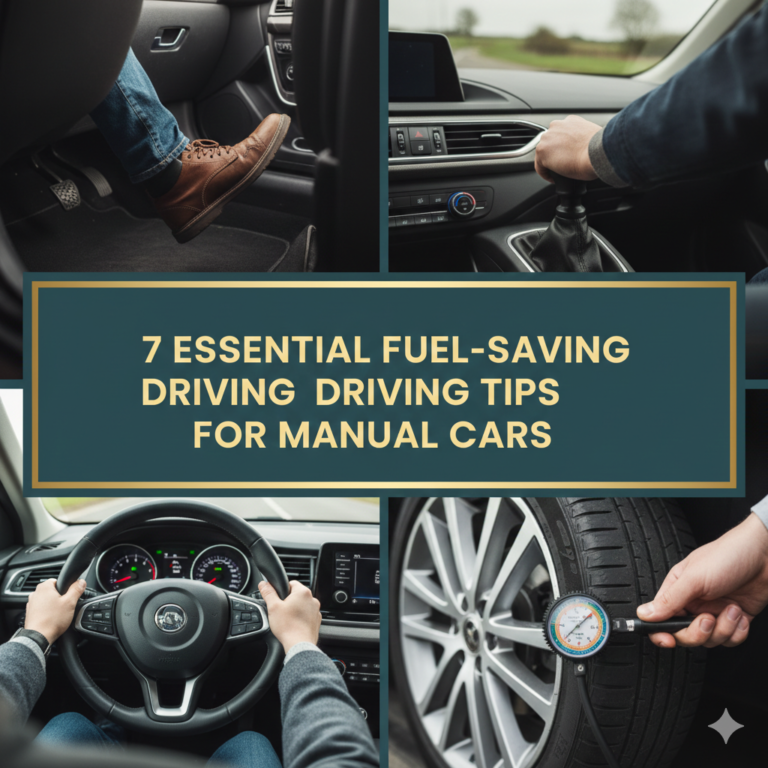
Why Manual Cars Save More Gas Than Autos
Manual transmissions allow drivers to control the engine and the wheels. You control when to change gears, not a computer. This single button takes the guess work out of saving money at the pump.
In automatic vehicles, the transmission shifts according to programming. They have no idea whether you’re trying to conserve fuel or you just fueled up the tank. If you’re driving a manual car, you can choose the most efficient gear for all circumstances.
Best advantages of manual transmissions for fuel economy:
- You chose when to change gear
- Less weight equals less fuel required to move
- Direct drive between the engine and wheels is also more energy efficient
- No power-hungry hydraulic systems
The contrast appears at the gas pump. Manual transmission cars usually get 2-10% better fuel economy than cars with automatics. That may not sound like much, but it can mount rapidly when you add up all those days and months.
Tip 1: Shift to Higher Gears Early
Your engine doesn’t have to be howling to hurl your car through the next turn. One of the greatest fuel saving driving tips for manual cars is changing to higher gears as soon as possible.
Most drivers shift too late. They wait and let the engine scream before grabbing another gear. This is a waste of fuel, because the faster your engine’s running, the more gas it consumes.
When should you shift?
For most cars, the optimal range is between 2,000 and 2,500 RPM. Monitor your tachometer, the gauge that displays engine speed. Hence, when the gauge reaches this range, upshift.
You are not going to do any damage to your engine. Current vehicles handle low-rev driving perfectly well. Your engine actually prefers operating at lower revs.
The RPM Sweet Spot for Different Situations
There are slightly different ideal shift points for making the best use of this power under different driving conditions:
| Driving Condition | Suggested Shift Point | Why This Works |
|---|---|---|
| City driving | 2,000-2,200 RPM | Frequent stop-and-go needs earlier shifts |
| Highway cruising | 2,200-2,500 RPM | Momentum is key; keep engine revs in check |
| Uphill driving | 2,500-3,000 RPM | For more grunt without overdoing it |
| Downhill driving | 1,800-2,000 RPM | Gravity’s helping out — no need for as much power |
Early shifting keeps your engine in its most efficient rpm range. Think of it as jogging rather than sprinting. You’ll cover the same distance and expend way less energy.
Tip 2: Master Smooth Acceleration Techniques
Stepping on the gas is a hoot. It also depletes your fuel tank even faster than most things.
It’s down-right revolutionary to pull away from a stop smoothly with an accelerator that seems slung between your toes and knees. When you floor the gas, the engine stuffs extra fuel into cylinders. Most of that fuel is wasted as the engine grapples to burn it effectively.
How to accelerate efficiently:
Slowly press the gas pedal. Pretend there’s a raw egg under your foot you don’t want to break. Increase speed gradually from 2-3 seconds to 5-10.
That does not mean driving super-slow. You can still hang with traffic. Just go easy on the gas.
The 5-Second Rule
Give this a shot: Begin counting to five as you accelerate from a stop to the speed you want. You are forced to space out the acceleration, and burn less fuel.
Acceleration from stop lights is the guzzling equivalent of racing. Smashing the gas can jack up fuel consumption 40 percent over gentle acceleration, studies have shown. That’s money literally going up in smoke.
Your passengers will thank you for a smoother ride, as well. Nobody appreciates being jerked around in their seat.
Tip 3: Use Engine Braking Instead of Regular Brakes
Here’s a fuel-saving tip many drivers overlook: Your engine can help slow you down without using any fuel at all.
Engine braking is the practice of downshifting to lower gears and allowing the engine resistance to slow your car. Most modern cars will shut off fuel injection after you do this. No fuel burned during deceleration.
Now compare that to how your car would roll if you put it into neutral but also kept the brakes depressed. Most drivers believe that does save fuel, when in truth it’s just the opposite. In neutral, your engine will burn gas just to keep idling.
When and how you should use engine braking:
When you approach a red light or want to slow down, lift your foot off the gas while remaining in gear. The car will gradually start to slow down. If you require more deceleration, downshift one gear at a time.
When Engine Braking Works Best
Engine braking excels in these conditions:
- Approaching red lights or stop signs
- Driving down long hills
- Slowing for curves or turns
- Traffic is thick with many speeding up and slowing down
Be mindful not to downshift too soon or to skip gears. This is unnecessary wear and tear on your transmission. Go into each gear one click at a time, sync pace with the gear.
Going downhill? Engine braking is also good for your brake pads, which can overheat and wear out. You’re getting great gas mileage AND saving on brake repair costs!
Tip 4: Maintain Steady Speed on Highways
Speed alterations consume fuel in a hurry. Each time you accelerate, your engine is working harder and using more gasoline. Maintain a steady speed—one of the easiest ways to save fuel in a manual car.
On the highway, pick a speed you’re comfortable cruising at and stick with it. If your car has it, use cruise control or practice putting steady pressure on the gas pedal.
Why steady speed matters:
Your vehicle engine works best at a consistent RPM. Speeding up and slowing down are constant adjustments that burn fuel. It’s like filling a bathtub when the drain is open.
The Speed-Fuel Consumption Relationship
Fuel economy depends more on speed than people think:
| Speed (mph) | Relative Fuel Efficiency | Additional Cost per 100 Miles |
|---|---|---|
| 55 | 100% (baseline) | $0 |
| 65 | 92% | +$1.50 |
| 75 | 82% | +$3.20 |
| 85 | 70% | +$6.00 |
Numbers come from average sedan with regular gas at $3.50/gallon
At higher speeds, the air resistance is significantly higher. On your car at 75 mph it plows through a lot more air than when you’re traveling at 60 mph. All that extra resistance consumes more fuel to overcome.
Identify the speed over which traffic moves smoothly with minimal passing and overtaken. That’s typically 60-70 mph on most highways.
Give the car in front a lot of space. This buffer allows you to simply cruise when everyone else brakes or accelerates.
Tip 5: Skip Gears When Safe and Appropriate
You’re not always expected to go through each and every gear. Using the “skip-shift” feature (blocking a gear) can help fuel economy under various circumstances.
When you’re learning to drive the traditional way, shifting gears is a part of rookie driving lessons: 1st gear, 2nd gear, 3rd gear, 4th and finally, when you reach highway speeds (65 miles per hour) all the way up to 5th. But it is not always necessary or efficient.
When to skip gears:
You can often jump directly from 1st to 3rd gear when you start from a stop on flat terrain. This is possible because we have enough torque to do that in modern engines.
Downshifting works the same way. Shifting car in 5th gear to 3rd with brake is good. Your transmission won’t explode.
Block Shifting Scenarios
Here are some real-world scenarios where not using gears is the smart choice:
Accelerating from a stop:
- Light traffic, flat road: 1st → 3rd → 5th
- Mild acceleration required: 1st → 3rd
- Downhill start: 2nd → 4th
Slowing down:
- Highway to urban speed: 5th → 3rd
- Moderate deceleration: 4th → 2nd
- When stopping: Any gear → 2nd → Neutral
The trick is getting your speed to match the gear. Don’t let the engine labor too much. If your vehicle feels like it’s shuddering or straining, you’ve probably taken it too long.
It also saves your clutch because block shifting. And, less clutch wear translates to lower repair costs over time.
As long as the gear matches your speed. Pressing the gas and switching into too low a gear while driving fast is bad for your engine.
Tip 6: Minimize Clutch Slipping and Idling
The thing is, in the clutch many drivers burn more fuel than they know. Correct clutch use is key to the fuel-saving driving tips for manual cars.
Slipping can occur when the clutch is only partially engaged for long periods. This generating of friction and heat while burning more fuel is very bad. Your engine is running but the power isn’t quite getting to the wheels.
Some of the common clutch mistakes which waste fuel:
- Riding the clutch when you’re driving
- Using the clutch instead of the brake while stopping on hills
- Slipping the clutch in traffic jams
- Keeping the clutch in at red lights
Each of these behaviors make your engine work harder than it needs to.
Proper Clutch Habits
Adhere to these guidelines to use the clutch efficiently:
At stops: Change to neutral and disengage the clutch completely. Don’t let the clutch out and sit in gear.
On hills: Hold the position with handbrake. Only press the clutch when it is time to move.
In traffic: Shift to neutral if you’re stopped for 10 seconds or more. Consistently clutching also tires your leg and wastes fuel.
While you’re behind the wheel: You should never rest your foot on the clutch unless you are actually shifting gears.
Idling wastes fuel too. Turn off the engine if you’re idling for more than 30 seconds. Restarting consumes less fuel than idling for 30 seconds.
Some newer manual cars have such start-stop systems built in. If your car has that feature, let it do its job.
Tip 7: Plan Your Route and Anticipate Traffic
The number one fuel-saving practice comes long before you turn the key in your engine. Smart route planning, and defensive driving to some extent can make a tremendous difference in fuel consumption.
Look ahead while driving. Scan the road 10 to 15 seconds down the road in front of your vehicle. This allows you to anticipate stops, slowdowns and obstacles.
Benefits of anticipating traffic:
You can begin to slow down when you see brake lights in front. Let off the gas and brake with the engine. By the time you get to where traffic has slowed, you may not even need your brakes.
This preserves your momentum and saves fuel. With each braking to a full stop and accelerating again, you are using additional energy.
Traffic Prediction Strategies
Look out for these signs to manage your driving early:
Traffic lights: Get to know the lights on your most common routes. And if a light turns green as you approach, you might just catch it. If it’s just turning red, slow down gradually rather than racing to make the stop line.
Merge zones: Slow down well before you reach the bottleneck when traffic merges ahead. The slow down beat the sudden stop.
School zones and pedestrian areas: Think ahead to slow down. It’s a waste of fuel to hurry up and then apply the brakes.
Rush hour planning: Is there a way you can leave 15 minutes earlier or later? Fewer cars equals better fuel economy, even if you drive more miles.
Before you head out, check the traffic on navigation apps. A marginally longer route with smoother traffic flow derives better fuel economy than the shortest distance that requires constant stops.
Additional Money-Saving Driving Habits
Beyond the seven most important tips, these are your fuel savings multipliers:
Keep your tires properly inflated: Inspect your tires on a monthly basis. Underinflated tires raise rolling resistance and force your engine to work harder. This can cut fuel efficiency 3 to 4%.
Lose some weight: Each 100 pounds your car carries reduces fuel efficiency by about 1%. Empty the trunk and back seat. Don’t lug things you don’t need.
Shut windows at freeway speeds: Open windows add drag and make your engine work harder. Over 50 mph, air conditioning is actually more fuel-efficient than open windows.
Maintenance matters: Air filters to regularly clean, fresh oil and tune-ups keep your engine efficient. According to the U.S. Department of Energy, bad car maintenance can consume you more between 10-20% fuel.
Consolidate trips: Cold engines are thirstier. Five stops, one trip beats the hell out of five trips.
Measuring Your Fuel Savings
Keep track of your progress to help stay motivated. Here’s how to measure improvement:
Find your baseline: Fill ‘er up all the way. Reset your trip odometer. Drive normally for a week. Refill and record the gallons used.
This is done by dividing the miles driven by the gallons used. That’s your MPGs at the source.
Apply the tips: Practice fuel-saving driving tips for manual cars throughout the next week. Take the same paths as much as you can.
Compare results: Refill after a week. Calculate your new MPG. The difference shows your improvement.
Keep a fuel log for a month. You will discover patterns and determine which techniques are best for your car and driving style.
Most cars will include a trip computer that will display both the current and average fuel consumption. Those function as a means of experiencing instant feedback on your sharpened driving skill.
Common Mistakes That Waste Fuel
Here are a few fuel-wasting habits that undermine good techniques:
Driving in the wrong gear: You’re cruising at 45 mph, but you’re driving blinded by screaming at that speed using 3rd gear instead of a high economy 5th.
Aggressive driving: Speeding, rapid acceleration and hard braking reduce mileage on the highway by 15–30% at highway speeds and 10–40% in stop-and-go traffic.
Unnecessarily using premium gas: Unless your ride demands it, premium fuel won’t boost performance or economy. You’re just wasting money.
Excessive air conditioning: Use of AC decreases fuel efficiency by 5-25 percent. Use it wisely. Crack the windows if it’s warm.
Short drives only: Engines like to warm up; they can’t when you shut them off right away. Frequent short trips leave your engine never having reached its peak efficiency.
Frequently Asked Questions
Does coasting in neutral really save fuel?
No. A fuel injected car uses no gas when you coast in gear with your foot off the throttle. And in neutral, the engine will consume fuel to idle. Best for fuel economy, coast in gear.
What is the most efficient gear for highway driving?
The biggest gear you can manage without laboring the engine. For such cars, at 60-70 mph it is the 5th or 6th gear. You’ll want to keep your RPMs between 2,000 and 2,500.
How much gas can I expect to save from these techniques?
Drivers on average realize fuel economy gains of 10-25% when using these tips regularly. A 30 MPG car would get about 33-37 miles per gallon. It adds up to hundreds of dollars over a year.
Is it bad to skip gears in a manual transmission?
No, if you rev-match. Running up the gears isn’t dangerous and it can actually improve mileage by avoiding unnecessary shifting. Just don’t make the engine work too hard in too high a gear at low speeds.
Is it worth putting it in neutral at stop lights?
Yes. Putting the car in neutral and letting out the clutch will save wear on your clutch and throwout bearing. If you’ll be at stop for more than just a few seconds, neutral is the way to go.
Which is more efficient in terms of fuel, using A/C or opening windows?
It depends on speed. Below 40 mph, it’s more fuel efficient to open the windows. Above 50 mph, air conditioning actually uses less fuel than open windows. Keep windows up and use AC at highway speeds.
How often to check tire pressure for fuel economy?
Monitor tire pressure monthly or before long trips. Good quality tires in good condition can save you 3% of your fuel. Measure cold in the morning for accurate readings.
Could these tips harm my manual transmission?
No. They’re actually easier on your transmission than driving aggressively. Early shifting, smooth acceleration, and proper use of the clutch extend the life of your transmission and clutch.
Your Fuel-Saving Journey Starts Now
Conserving fuel in a stick-shift car isn’t about getting from point A to point B at 15 miles per hour or turning your commute into something that slightly resembles the gauntlet. It’s about how you drive, not how hard you drive.
This list of seven fuel saving tips for manual transmission vehicles will allow you to maximize your fuel economy. Shift early, roll on the throttle gently, let engine braking help you, keep constant speeds as long as you can, skip some gears when appropriate, minimize your clutch work and look forward.
Begin with one or two methods. Become a master of them and make them second nature. Now tack on these extra driving tricks.
The savings quickly add up. And a 15% increase in fuel efficiency will save the average driver $300-500 annually. That’s a nice vacation or more than several car payments.
And that is a skill your automatic-driving compatriots don’t have. Use it. Seize the moment every shift, each time you accelerate.
Your wallet will love you as you keep driving by gas stations and not stopping.