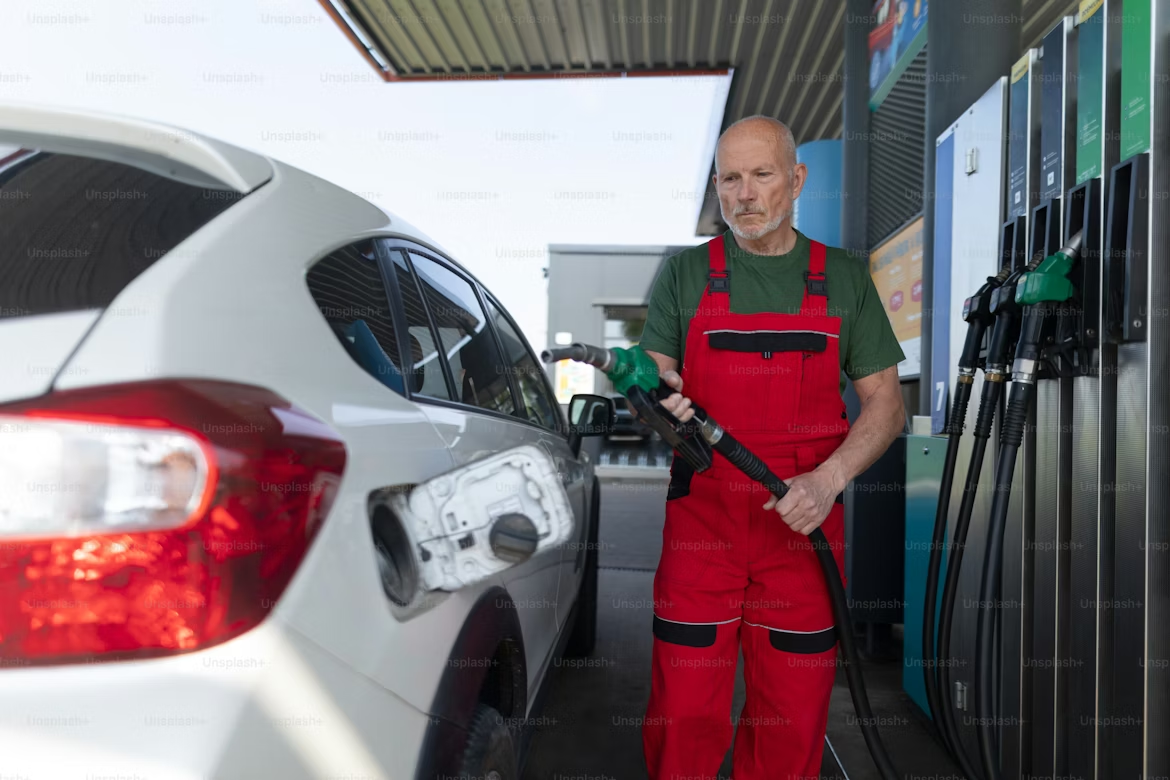
Fuel prices continue to fluctuate across the world, placing pressure on household budgets and businesses alike. Whether you drive a compact car, an SUV, a motorcycle, or even a hybrid vehicle, improving fuel efficiency is one of the simplest ways to reduce expenses while also minimizing environmental impact. The good news is that saving fuel does not always require expensive upgrades or advanced technology. In many cases, small changes in driving habits and basic maintenance can lead to significant improvements.
This article explores ten practical and easy fuel-saving tips that work for virtually any vehicle. Along the way, you will find useful tables and structured information to help you apply these strategies effectively.
- maintain proper tire pressure
One of the simplest yet most overlooked ways to improve fuel efficiency is keeping your tires properly inflated. Underinflated tires increase rolling resistance, meaning the engine has to work harder to move the vehicle.
When tires are even slightly below the recommended pressure, fuel consumption can increase noticeably. Proper tire pressure ensures better contact with the road, smoother movement, and reduced strain on the engine.
Recommended tire pressure impact table:
| Tire condition | Fuel efficiency impact | Additional effects |
|---|---|---|
| Properly inflated | Optimal | Better handling, longer tire life |
| Underinflated (low) | -3% to -5% | Faster wear, poor handling |
| Overinflated (high) | Slight improvement | Reduced traction, uneven wear |
To maintain correct pressure:
- Check tire pressure at least once a month
- Use a reliable pressure gauge
- Follow manufacturer recommendations (usually found inside the driver’s door or manual)
- drive smoothly and avoid aggressive driving
Aggressive driving habits such as rapid acceleration, hard braking, and speeding can significantly increase fuel consumption. Smooth driving allows your engine to operate more efficiently.
For example, accelerating gradually and anticipating traffic conditions can reduce unnecessary fuel usage. Sudden stops and starts waste energy that could otherwise be conserved.
Driving behavior comparison:
| Driving style | Fuel consumption level | Engine strain |
|---|---|---|
| Smooth driving | Low | Minimal |
| Moderate driving | Medium | Moderate |
| Aggressive driving | High | High |
Key practices:
- Accelerate gently
- Maintain a steady speed
- Avoid unnecessary braking
- reduce excess weight in your vehicle
Carrying unnecessary weight forces your engine to use more fuel. Even an extra 50–100 kilograms can have a noticeable impact on fuel efficiency.
Common sources of excess weight include:
- Tools and equipment left in the trunk
- Unused roof racks
- Heavy items stored long-term
Weight vs fuel consumption estimate:
| Extra weight (kg) | Fuel consumption increase |
|---|---|
| 0–50 | Minimal |
| 50–100 | +1% to +2% |
| 100+ | +3% to +5% |
Removing unnecessary items from your vehicle is a quick and cost-free way to improve efficiency.
- avoid excessive idling
Idling consumes fuel without moving the vehicle. Many drivers leave their engines running while waiting, which wastes fuel unnecessarily.
Modern engines do not require long warm-up times. In most cases, driving gently after starting is sufficient.
Idling fuel usage example:
| Idling time | Fuel wasted (approx.) |
|---|---|
| 10 minutes | 0.1–0.2 liters |
| 30 minutes | 0.3–0.6 liters |
| 1 hour | 0.6–1.0 liters |
If you expect to stop for more than a minute, it is usually more efficient to turn off the engine.
- maintain your vehicle regularly
Regular maintenance ensures that your vehicle operates at peak efficiency. Neglecting maintenance can lead to increased fuel consumption and costly repairs.
Important maintenance tasks:
- Engine oil changes
- Air filter replacement
- Spark plug inspection
- Fuel system cleaning
Maintenance impact table:
| Maintenance task | Frequency | Fuel efficiency impact |
|---|---|---|
| Oil change | Every 5,000–10,000 km | Improves engine efficiency |
| Air filter replacement | Every 10,000–15,000 km | +5% to +10% efficiency |
| Spark plug check | Every 20,000–30,000 km | Better combustion |
A well-maintained engine burns fuel more effectively, resulting in better mileage.
- use the right gear and driving speed
Driving at the correct speed and using appropriate gears can significantly affect fuel consumption. Engines are most efficient at moderate speeds and steady RPM levels.
For manual vehicles:
- Shift gears early
- Avoid high RPM driving
For automatic vehicles:
- Avoid sudden acceleration
- Use cruise control when possible
Speed vs fuel efficiency chart:
| Speed (km/h) | Fuel efficiency |
|---|---|
| 40–60 | Moderate |
| 60–80 | Optimal |
| 80–100 | Slight decrease |
| 100+ | Significant decrease |
Driving at excessively high speeds increases aerodynamic drag, which reduces efficiency.
- limit use of air conditioning
Air conditioning systems place additional load on the engine, especially in smaller vehicles. While it is often necessary in hot climates, using it wisely can save fuel.
AC usage impact:
| AC setting | Fuel consumption increase |
|---|---|
| Off | Baseline |
| Low | +2% to +5% |
| High | +5% to +10% |
Tips to reduce AC usage:
- Park in shaded areas
- Use ventilation when possible
- Avoid maximum cooling settings unless necessary
- plan your trips efficiently
Combining errands and planning routes can reduce the total distance traveled and save fuel. Short trips with cold engines consume more fuel than longer, steady drives.
Trip planning benefits:
| Strategy | Fuel-saving benefit |
|---|---|
| Combining trips | Reduces total fuel use |
| Avoiding traffic | Minimizes idling |
| Using shortest routes | Saves time and fuel |
Using navigation tools can help identify efficient routes and avoid congestion.
- use high-quality fuel and lubricants
While it may be tempting to use cheaper fuel, high-quality fuel often burns more efficiently and keeps the engine cleaner.
Benefits of quality fuel:
- Better combustion
- Reduced engine deposits
- Improved mileage over time
Fuel quality comparison:
| Fuel type | Efficiency | Engine impact |
|---|---|---|
| Low-quality | Lower | More deposits |
| Standard | Moderate | Normal wear |
| High-quality | Higher | Cleaner engine |
Similarly, using recommended engine oil improves performance and reduces friction.
- minimize aerodynamic drag
Aerodynamic drag increases as speed rises, making the engine work harder. External accessories like roof racks and open windows can reduce fuel efficiency.
Drag impact examples:
| Condition | Fuel efficiency impact |
|---|---|
| Windows closed | Optimal |
| Windows open (high speed) | -5% to -10% |
| Roof rack installed | -10% to -20% |
To reduce drag:
- Remove roof racks when not in use
- Keep windows closed at high speeds
- Avoid carrying bulky external loads
overall fuel-saving potential summary
By combining these ten tips, drivers can achieve substantial fuel savings. The total impact depends on driving habits, vehicle condition, and environment.
Combined savings estimate:
| Tip category | Potential savings |
|---|---|
| Driving habits | 10%–20% |
| Vehicle maintenance | 5%–15% |
| Weight & aerodynamics | 5%–10% |
| Trip planning | 5%–10% |
Total potential savings: up to 30% or more in some cases
final thoughts
Improving fuel efficiency does not require drastic changes or expensive investments. By adopting smarter driving habits, maintaining your vehicle properly, and being mindful of how you use it, you can significantly reduce fuel consumption.
These ten easy tips are practical, cost-effective, and applicable to almost any vehicle type. Over time, the savings can add up considerably, benefiting both your wallet and the environment.
frequently asked questions (faqs)
- how much fuel can i realistically save by following these tips?
Most drivers can expect to save between 10% and 30% on fuel consumption depending on how consistently they apply the tips and their current driving habits. - does turning off the engine frequently damage it?
No, modern engines are designed to handle frequent starts and stops. Turning off the engine during long waits actually reduces wear and saves fuel. - is premium fuel always better for fuel efficiency?
Not necessarily. You should use the fuel grade recommended by your vehicle manufacturer. Premium fuel only benefits vehicles designed for it. - how often should i check my tire pressure?
It is recommended to check tire pressure at least once a month and before long trips. - does driving slower always save fuel?
Driving at moderate speeds is most efficient. Extremely slow or excessively fast driving can both reduce fuel efficiency. - can air conditioning really affect fuel consumption that much?
Yes, especially in smaller vehicles or during city driving. AC can increase fuel usage by up to 10% in some cases.
By applying these simple yet effective strategies, any driver can take control of fuel consumption and make smarter, more efficient choices on the road.