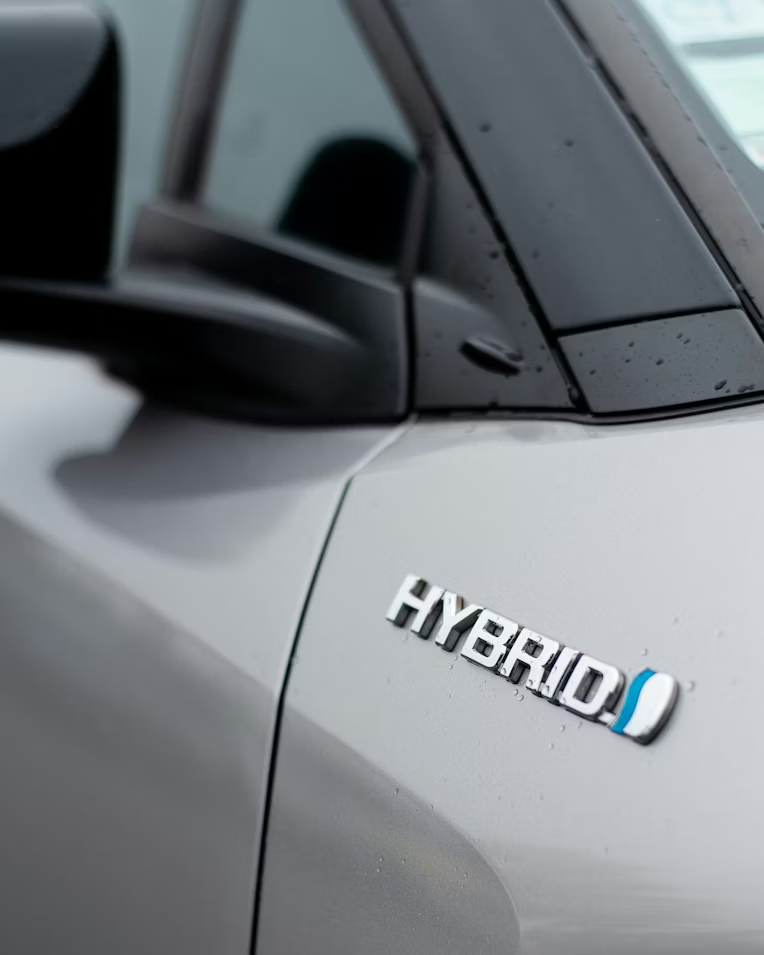
Hybrid vehicles promise better fuel efficiency, lower emissions, and a smoother driving experience—but simply owning one doesn’t guarantee you’re getting the best possible mileage. Many drivers unknowingly adopt habits that reduce efficiency instead of maximizing it. The truth is, hybrids behave differently from conventional gasoline cars, and understanding those differences is the key to unlocking their full potential.
This guide dives deep into practical, real-world strategies that go beyond generic advice. You’ll find not just explanations, but also actionable insights, comparisons, and data-driven tables to help you optimize your hybrid’s performance.
- master smooth acceleration and braking
Hybrid systems are designed to reward gentle driving. Sudden acceleration forces the gasoline engine to kick in aggressively, while abrupt braking wastes kinetic energy that could otherwise be recovered.
Instead, gradual acceleration allows the electric motor to handle more of the workload. Similarly, gentle braking maximizes regenerative braking, which converts motion into stored electrical energy.
Here’s how driving style impacts efficiency:
| Driving Behavior | Fuel Efficiency Impact | Battery Recovery | Engine Usage |
|---|---|---|---|
| Aggressive acceleration | Low | Low | High |
| Smooth acceleration | High | Medium | Low |
| Hard braking | Low | Low | N/A |
| Gradual braking | High | High | N/A |
A useful technique is to imagine there’s a cup of water on your dashboard—drive in a way that wouldn’t spill it.
- optimize your use of electric-only mode
Most hybrids allow short distances to be driven purely on electric power. However, this mode is often misunderstood. Using it at the wrong times can actually reduce overall efficiency.
Electric-only mode is most effective at:
- Low speeds (city driving)
- Stop-and-go traffic
- Parking maneuvers
Avoid using electric mode when:
- Driving uphill
- Accelerating quickly
- Traveling at high speeds
Why? Because draining the battery quickly forces the engine to recharge it later, often inefficiently.
Electric mode efficiency comparison:
| Scenario | Electric Mode Benefit |
|---|---|
| City traffic | Very High |
| Highway driving | Low |
| Uphill driving | Negative |
| Stop-and-go traffic | High |
Think of electric mode as a strategic tool, not a default setting.
- maintain optimal tire pressure
Tire pressure is one of the simplest yet most overlooked factors affecting fuel economy. Underinflated tires increase rolling resistance, forcing the vehicle to consume more energy.
Even a small drop in pressure can lead to noticeable inefficiency.
| Tire Pressure Condition | Rolling Resistance | Fuel Consumption |
|---|---|---|
| Underinflated | High | Increased |
| Optimal | Balanced | Efficient |
| Overinflated | Low | Slightly Improved (but unsafe ride quality) |
Check tire pressure at least once a month and before long trips. Always follow the manufacturer’s recommended PSI rather than guessing.
- reduce unnecessary weight and drag
Hybrid vehicles are particularly sensitive to excess weight. Carrying unnecessary items forces both the electric motor and gasoline engine to work harder.
Common sources of inefficiency:
- Heavy items in the trunk
- Roof racks when not in use
- Open windows at high speeds
Weight vs efficiency impact:
| Extra Weight (kg) | Estimated Fuel Efficiency Loss |
|---|---|
| 25 kg | ~1–2% |
| 50 kg | ~2–4% |
| 100 kg | ~5–7% |
Aerodynamic drag also plays a major role, especially on highways. Removing roof racks and keeping windows closed at high speeds can significantly improve mileage.
- use eco mode intelligently
Eco mode adjusts throttle response, climate control, and engine behavior to prioritize efficiency. However, it’s not always ideal for every situation.
Eco mode works best when:
- Driving in urban areas
- Maintaining steady speeds
- Commuting daily
It may be less effective when:
- Overtaking vehicles
- Driving on steep inclines
- Carrying heavy loads
Eco mode vs normal mode:
| Driving Condition | Recommended Mode |
|---|---|
| City commuting | Eco |
| Highway cruising | Normal/Eco |
| Mountain roads | Normal |
| Heavy load | Normal |
Switching modes based on conditions can give you better results than sticking to one setting.
- plan your routes and avoid traffic
Hybrids shine in city environments, but excessive idling and inefficient routes still waste fuel. Smart route planning can significantly improve efficiency.
Factors to consider:
- Traffic congestion
- Number of stops
- Road elevation
- Speed limits
Efficiency comparison:
| Route Type | Average Efficiency |
|---|---|
| Smooth city route | High |
| Stop-heavy route | Medium |
| Congested traffic | Low |
| Highway steady flow | High |
Using navigation apps that provide real-time traffic updates can help you avoid inefficient routes.
- keep your hybrid battery healthy
The battery is the heart of a hybrid vehicle. While most systems are designed to last years, poor habits can reduce performance over time.
Tips for battery health:
- Avoid prolonged extreme temperatures
- Don’t leave the car unused for long periods
- Drive regularly to maintain charge cycles
- Follow recommended service intervals
Battery performance vs driving efficiency:
| Battery Condition | Fuel Efficiency | Electric Range |
|---|---|---|
| Excellent | High | Maximum |
| Moderate | Medium | Reduced |
| Poor | Low | Minimal |
A well-maintained battery ensures the electric motor can contribute effectively.
- minimize air conditioning and electrical load
Air conditioning and electronic accessories draw power, which ultimately comes from fuel. In hybrids, this load can reduce electric-only driving time.
Strategies to reduce load:
- Use climate control moderately
- Park in shaded areas
- Use seat ventilation if available
- Turn off unused electronics
Energy consumption breakdown:
| System | Energy Usage Impact |
|---|---|
| Air conditioning | High |
| Infotainment system | Low |
| Headlights | Low |
| Heated seats | Medium |
Even small reductions in energy usage can add up over time.
real-world fuel efficiency comparison chart
Below is a simplified comparison showing how combined habits influence fuel savings:
| Driving Style + Habits | Estimated MPG Improvement |
|---|---|
| Poor habits | Baseline |
| Smooth driving only | +10–15% |
| + Proper tire pressure | +15–20% |
| + Weight reduction | +20–25% |
| + Smart route planning | +25–35% |
This demonstrates how multiple small improvements can compound into significant gains.
common mistakes hybrid drivers make
Many hybrid owners unknowingly reduce efficiency due to misconceptions.
Frequent mistakes include:
- Flooring the accelerator assuming electric boost helps
- Overusing EV mode in the wrong conditions
- Ignoring maintenance because “it’s a hybrid”
- Carrying unnecessary cargo
- Driving aggressively on highways
Avoiding these mistakes is just as important as adopting good habits.
future trends in hybrid efficiency
Hybrid technology continues to evolve. Newer models feature:
- Improved battery density
- Smarter energy management systems
- Predictive navigation integration
- Enhanced regenerative braking systems
These advancements will make it easier for drivers to achieve optimal efficiency without constant attention.
faqs
- do hybrids really save fuel compared to regular cars
Yes, especially in city driving. Hybrids use electric power at low speeds, significantly reducing fuel consumption compared to traditional gasoline vehicles. - is it better to drive a hybrid slowly
Not necessarily slowly, but smoothly. Consistent speeds and gentle acceleration are more important than simply driving slow. - how long do hybrid batteries last
Most hybrid batteries last between 8 to 15 years, depending on usage and maintenance. - can aggressive driving damage a hybrid system
While it may not immediately damage the system, aggressive driving reduces efficiency and can increase wear over time. - should i always use eco mode
Eco mode is helpful in many situations but not all. It’s best to switch modes depending on driving conditions. - does highway driving reduce hybrid efficiency
Hybrids are generally more efficient in city driving, but modern hybrids still perform well on highways when driven steadily.
Final thoughts
Getting the most out of a hybrid vehicle isn’t about one single trick—it’s about combining multiple smart habits. Smooth driving, proper maintenance, and thoughtful use of features can transform your vehicle’s efficiency.
What makes hybrids unique is that they respond immediately to how you drive. Once you adapt your habits, the improvements become noticeable not just in fuel savings, but in overall driving comfort and control.