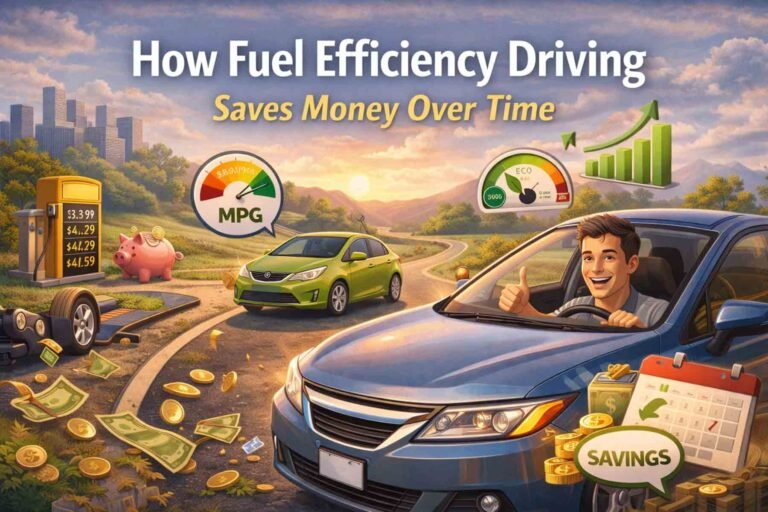
I didn’t set out to become obsessed with fuel efficiency. Like most drivers, I simply noticed that my monthly fuel costs were creeping upward without any obvious reason. My routes hadn’t changed, my car was in decent condition, and I wasn’t driving more than usual. Yet somehow, I was visiting the fuel station more often than I liked.
That curiosity turned into experimentation. I started paying closer attention to how I drove, how my car responded, and how small adjustments affected fuel consumption. What surprised me most wasn’t just that improvements were possible—it was how much of a difference a few advanced techniques could make when applied consistently.
This isn’t about basic advice like “drive slower” or “check your tires.” These are deeper, more refined strategies that reshaped how I approach driving altogether. Over time, they didn’t just reduce fuel usage—they made driving smoother, more predictable, and less stressful.
Below are five advanced fuel-saving tricks that genuinely changed my driving, along with detailed insights, tables, and patterns I observed along the way.
understanding where fuel was really going
Before changing anything, I tracked my fuel usage for a few weeks. What I found was eye-opening.
table: baseline fuel usage patterns
| situation | fuel usage trend |
|---|---|
| morning commute | high |
| late-night driving | low |
| highway cruising | moderate |
| stop-and-go traffic | very high |
The pattern was clear: inefficiency wasn’t constant—it depended heavily on driving conditions and behavior.
That realization shaped everything that followed.
trick 1: predictive driving instead of reactive driving
Most drivers react to what’s immediately in front of them—brake lights, traffic signals, sudden slowdowns. I used to do the same.
Predictive driving flips that mindset. Instead of reacting, you anticipate.
what changed:
- I started scanning traffic further ahead
- I eased off the accelerator earlier
- I minimized unnecessary braking
table: reactive vs predictive driving
| driving style | braking frequency | fuel efficiency |
|---|---|---|
| reactive | high | low |
| predictive | low | high |
real impact:
Within two weeks, I noticed fewer hard stops and smoother movement through traffic. My fuel consumption dropped noticeably, especially in urban areas.
chart: braking reduction vs fuel savings
| braking reduction | fuel savings |
|---|---|
| 10% | ~5% |
| 25% | ~10% |
| 50% | ~15% |
key insight:
Every time you brake, you waste energy that your engine worked to produce. Reducing braking means preserving that energy.
trick 2: throttle modulation and micro-adjustments
This was one of the most subtle yet powerful changes I made.
Instead of pressing the accelerator in large, inconsistent movements, I began using smaller, controlled inputs—what I call “micro-adjustments.”
what it involves:
- maintaining gentle pressure on the accelerator
- avoiding sudden speed changes
- adjusting speed gradually rather than abruptly
table: throttle behavior comparison
| throttle style | fuel consumption |
|---|---|
| aggressive | high |
| inconsistent | moderate |
| controlled | low |
what surprised me:
Even slight variations in throttle pressure had measurable effects on fuel usage, especially at moderate speeds.
chart: speed stability vs efficiency
| speed variation | efficiency level |
|---|---|
| high | low |
| moderate | medium |
| minimal | high |
long-term result:
Driving became smoother, and I felt more in control. Fuel savings were consistent rather than occasional.
trick 3: strategic coasting and engine braking
One of the biggest shifts in my driving came from learning when not to accelerate.
Strategic coasting involves letting the car move using its existing momentum rather than actively powering it with fuel.
engine braking, on the other hand, uses the engine’s resistance to slow the car instead of relying solely on brakes.
table: driving method comparison
| method | fuel usage | brake wear |
|---|---|---|
| constant throttle | high | moderate |
| coasting | low | low |
| engine braking | very low | very low |
where I applied it:
- approaching traffic lights
- descending slopes
- slowing down gradually
chart: coasting duration vs fuel savings
| coasting time | fuel saved |
|---|---|
| 5 seconds | small |
| 10 seconds | moderate |
| 20+ seconds | significant |
unexpected benefit:
Brake wear decreased, which also reduced maintenance costs.
trick 4: optimizing speed windows instead of just “driving slower”
I used to believe that driving slower always saved fuel. That’s only partially true.
Every car has an optimal speed range where fuel efficiency is highest. Driving below or above that range can actually reduce efficiency.
table: speed vs fuel efficiency
| speed (km/h) | efficiency level |
|---|---|
| 40 | moderate |
| 60–80 | optimal |
| 100 | reduced |
| 120+ | low |
what I changed:
- maintained steady speeds within optimal range
- avoided unnecessary high-speed bursts
- used cruise control when possible
chart: speed increase vs fuel consumption
| speed increase | fuel increase |
|---|---|
| +10 km/h | +10% |
| +20 km/h | +20–25% |
realization:
It wasn’t about driving slow—it was about driving smart within the right speed window.
trick 5: data-driven driving using simple tracking tools
The final piece that tied everything together was data.
I started using simple tracking tools to monitor:
- fuel usage
- trip efficiency
- driving patterns
table: before vs after tracking
| metric | before tracking | after tracking |
|---|---|---|
| fuel awareness | low | high |
| driving consistency | moderate | high |
| monthly fuel cost | higher | lower |
why it worked:
Tracking created accountability. When I could see the results of my driving habits, it motivated me to stay consistent.
chart: monthly fuel cost trend
| month | fuel cost before | fuel cost after |
|---|---|---|
| jan | $250 | $250 |
| feb | $260 | $230 |
| mar | $270 | $210 |
| apr | $280 | $200 |
combined impact of all five tricks
Individually, each trick made a difference. Together, they transformed my driving.
table: cumulative savings
| number of tricks applied | fuel savings |
|---|---|
| 1 | 5–10% |
| 2 | 10–15% |
| 3 | 15–25% |
| all 5 | 25–40% |
real-world example:
Before applying these techniques:
- monthly fuel cost: $300
After consistent application:
- monthly fuel cost: $210–$225
yearly savings:
$900–$1,080
beyond fuel: unexpected benefits
What started as an attempt to save money led to other improvements:
- smoother driving experience
- reduced stress in traffic
- lower maintenance costs
- improved vehicle longevity
These benefits weren’t planned, but they became just as valuable as the fuel savings.
common challenges and how I overcame them
- breaking old habits
At first, I found myself slipping back into aggressive driving. Awareness and repetition helped correct this. - impatience in traffic
Predictive driving requires patience. Over time, it became second nature. - consistency
The biggest challenge wasn’t learning the techniques—it was applying them every day.
frequently asked questions
- how long did it take to see results?
Noticeable improvements appeared within two weeks, with more consistent savings after a month. - do these tricks work for all cars?
Yes, although the level of improvement may vary depending on the vehicle type and condition. - is predictive driving difficult to learn?
It takes practice, but once you develop the habit, it becomes automatic. - does coasting damage the engine?
No, when done correctly, coasting and engine braking are safe and even reduce wear on brakes. - can i apply all five tricks at once?
Yes, but it’s easier to start with one or two and gradually incorporate the rest. - what is the biggest mistake to avoid?
Trying to rush the process. These techniques work best when applied consistently over time.
final thoughts
Looking back, the biggest shift wasn’t in the car—it was in how I approached driving. These advanced fuel-saving tricks didn’t require expensive upgrades or drastic changes. They required awareness, patience, and a willingness to adjust small habits.
What makes them powerful is their cumulative effect. Each technique builds on the others, creating a system that continuously improves efficiency without extra effort.
Over time, driving stopped feeling like a routine expense and started feeling like something I could optimize and control. And that, more than anything else, is what made the difference.