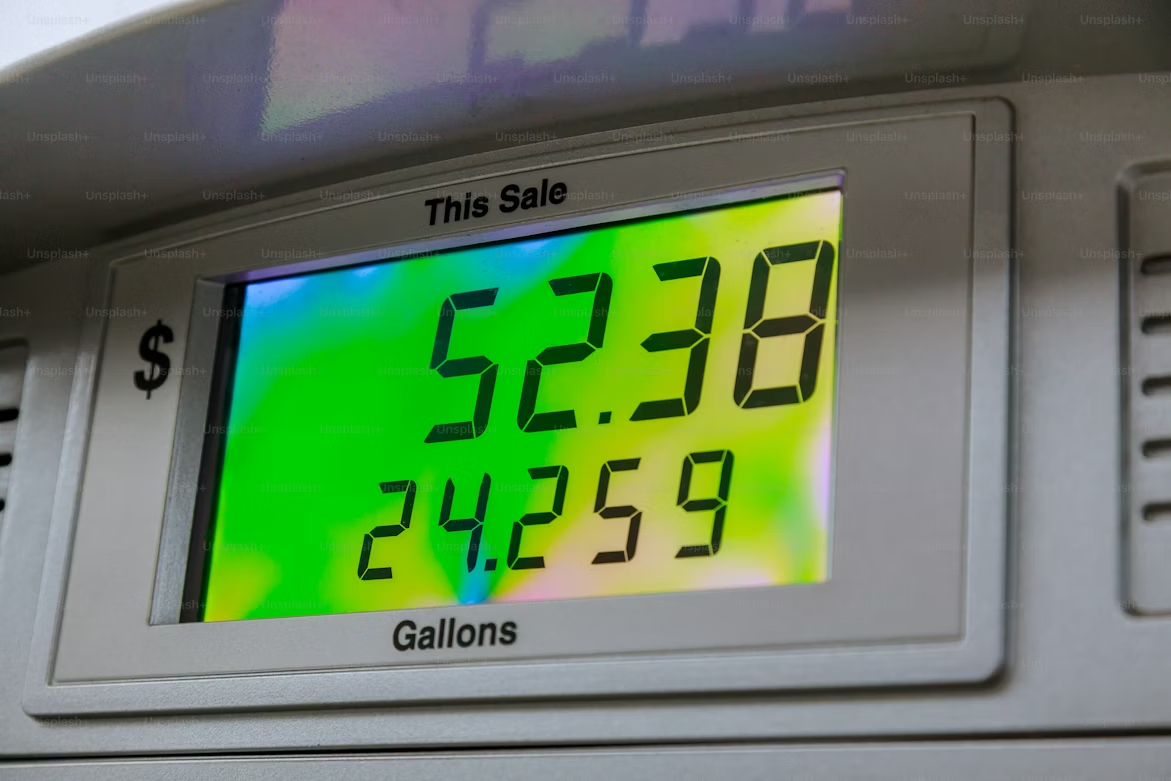
Fuel costs have a way of creeping into your monthly budget without asking for permission. One week everything feels manageable, and the next you’re noticing how often you’re stopping at the pump. For many drivers, the instinct is to blame fuel prices alone—but the truth is more nuanced. A significant portion of fuel waste happens quietly, inside everyday driving habits and small inefficiencies that go unnoticed.
The good news is that you don’t need to replace your car or drastically change your lifestyle to make a difference. A growing category of smart, accessible devices can help you cut fuel consumption in practical, measurable ways. These tools don’t rely on guesswork—they provide data, automation, and subtle corrections that guide you toward better efficiency.
This article explores nine smart fuel-saving devices that are easy to use, relatively affordable, and capable of delivering real-world savings. Along the way, you’ll find detailed tables, comparisons, and practical insights to help you decide what fits your driving style.
understanding fuel waste in modern driving
Before looking at devices, it helps to understand where fuel is lost. Even well-maintained vehicles can waste fuel due to:
- inconsistent acceleration
- prolonged idling
- inefficient routes
- tire pressure issues
- excess vehicle load
- delayed maintenance
These issues don’t always feel significant in isolation, but together they can reduce fuel efficiency by 20–30%.
table: sources of fuel inefficiency
| factor | typical loss range | visibility |
|---|---|---|
| aggressive driving | 10–40% | low |
| underinflated tires | 3–10% | very low |
| traffic delays | 5–20% | medium |
| engine inefficiency | 10–15% | low |
| excess weight | 2–5% | low |
Smart devices work by either reducing these losses directly or making them visible so you can act on them.
device 1: obd2 fuel efficiency monitor
An OBD2 (On-Board Diagnostics) monitor is one of the most effective starting points. It plugs into your car and provides real-time feedback about fuel consumption and engine performance.
what it does:
- tracks fuel usage in real time
- displays trip efficiency
- detects engine issues
- monitors idle time
table: obd2 impact on driving behavior
| metric | before usage | after usage |
|---|---|---|
| fuel awareness | low | high |
| idle time | frequent | reduced |
| acceleration pattern | inconsistent | smoother |
estimated savings:
10–20% improvement depending on driving habits.
why it works:
When drivers can see fuel usage instantly, they naturally adjust behavior—often without conscious effort.
device 2: smart tire pressure monitoring system (tpms)
Tire pressure has a direct impact on fuel efficiency, yet it’s often ignored. A smart TPMS provides real-time pressure readings and alerts.
what it solves:
- hidden pressure drops
- uneven tire wear
- increased rolling resistance
table: tire pressure vs fuel consumption
| tire condition | fuel impact |
|---|---|
| properly inflated | optimal |
| slightly underinflated | -2% mpg |
| moderately low | -5% mpg |
| severely low | -10% mpg |
additional benefit:
improves safety and extends tire lifespan.
device 3: fuel flow optimizer (eco tuning device)
Fuel flow optimizers or eco tuning devices connect to the engine control system and refine how fuel is delivered.
key functions:
- optimize fuel-air mixture
- adjust throttle response
- improve combustion timing
table: engine performance comparison
| parameter | standard | optimized |
|---|---|---|
| fuel usage | higher | lower |
| throttle efficiency | average | improved |
| engine smoothness | moderate | better |
estimated savings:
5–15%, depending on driving conditions.
device 4: gps-based smart navigation device
Modern navigation devices do more than provide directions—they actively help you avoid fuel-wasting scenarios.
features:
- real-time traffic updates
- alternative route suggestions
- fuel-efficient route selection
chart: traffic delay vs fuel waste
| delay time | additional fuel usage |
|---|---|
| 5 minutes | +5% |
| 10 minutes | +10% |
| 20 minutes | +20% |
why it matters:
Stop-and-go traffic is one of the least efficient driving conditions. Avoiding it can significantly reduce fuel use.
device 5: automatic start-stop system
An automatic start-stop device shuts off the engine when the vehicle is stationary and restarts it when needed.
ideal for:
- urban driving
- frequent traffic stops
- long signals
table: idling vs start-stop savings
| condition | fuel consumption |
|---|---|
| idling (1 hour) | 0.6–1 liter |
| start-stop active | near zero |
estimated savings:
5–10% in city driving conditions.
device 6: digital fuel tracking system
Fuel tracking devices or apps log your fuel usage over time, helping you identify patterns.
features:
- expense tracking
- mileage logs
- efficiency trends
chart: monthly fuel cost trend
| month | without tracking | with tracking |
|---|---|---|
| jan | $220 | $220 |
| feb | $230 | $210 |
| mar | $240 | $200 |
| apr | $250 | $190 |
why it works:
Tracking creates accountability. Once you see patterns, it becomes easier to make adjustments.
device 7: aerodynamic efficiency tools
These include devices like air deflectors and streamlined roof attachments designed to reduce drag.
table: speed vs aerodynamic impact
| speed (km/h) | drag effect |
|---|---|
| 50 | low |
| 80 | moderate |
| 100+ | high |
estimated savings:
2–8%, especially on highways.
device 8: lightweight lithium car battery
Traditional batteries are heavy. Replacing them with lithium alternatives reduces overall vehicle weight.
table: weight reduction benefits
| weight saved | fuel efficiency gain |
|---|---|
| 10 kg | ~1% |
| 25 kg | ~2–3% |
additional benefit:
faster charging and longer lifespan.
device 9: smart cruise control system
Smart or adaptive cruise control maintains consistent speed and adjusts automatically based on traffic.
table: driving consistency comparison
| driving style | fuel efficiency |
|---|---|
| variable speed | lower |
| steady speed | higher |
why it works:
Frequent speed changes waste fuel. Maintaining a steady pace improves efficiency.
combined device impact
Individually, these devices offer incremental improvements. Together, they can significantly reduce fuel costs.
table: combined savings potential
| number of devices used | estimated savings |
|---|---|
| 1–2 devices | 5–15% |
| 3–5 devices | 15–30% |
| 6+ devices | 30%+ |
real-world example
A driver spending $300 per month on fuel installs:
- obd2 monitor
- tpms
- navigation system
- start-stop device
after three months:
| category | before | after |
|---|---|---|
| monthly fuel | $300 | $225 |
| yearly cost | $3600 | $2700 |
annual savings: $900
cost vs payback period
| device | cost level | payback time |
|---|---|---|
| obd2 monitor | low | 1–2 months |
| tpms | low | 2–3 months |
| eco tuning device | medium | 3–6 months |
| navigation system | low/free | immediate |
| start-stop system | medium | 4–8 months |
| fuel tracker | low/free | immediate |
| aerodynamic tools | low | 3–6 months |
| lithium battery | medium | 6–12 months |
| smart cruise control | high | long-term |
choosing the right combination
Not all drivers need every device. The best mix depends on your driving environment.
city drivers:
- start-stop system
- navigation device
- fuel tracker
highway drivers:
- aerodynamic tools
- cruise control
- tire monitoring
mixed usage:
- combine monitoring, tracking, and optimization tools
common mistakes to avoid
- relying on devices without changing habits
- ignoring maintenance alerts
- buying low-quality tuning devices
- expecting instant maximum savings
- overloading the vehicle
devices enhance efficiency, but they don’t replace smart driving.
long-term benefits beyond fuel savings
Using these devices consistently can:
- reduce engine wear
- extend vehicle lifespan
- lower maintenance costs
- improve driving comfort
- reduce environmental impact
Over time, these benefits can be just as valuable as the fuel savings themselves.
frequently asked questions
- do fuel-saving devices really reduce fuel bills?
Yes, especially when combined with improved driving habits. Devices that provide real-time feedback tend to be the most effective. - which device gives the fastest results?
Navigation systems and fuel tracking tools provide immediate benefits by reducing unnecessary fuel use. - are eco tuning devices safe?
High-quality, vehicle-specific devices are generally safe, but low-quality options can cause issues. - how many devices should i use?
Even 2–3 well-chosen devices can make a noticeable difference. More devices increase potential savings. - can i install these devices myself?
Most devices like OBD2 monitors and TPMS systems are easy to install without professional help. - how long before i see savings?
Some improvements appear within days, while others become noticeable over a few weeks of consistent use.
final thoughts
Fuel efficiency isn’t about a single breakthrough—it’s about layering small, smart improvements that work together. The devices covered here don’t demand major changes or technical expertise. Instead, they quietly optimize how your vehicle operates and how you interact with it.
What makes them powerful is their consistency. Once installed and used regularly, they continue to deliver savings without requiring constant attention. Over time, these incremental gains add up, turning everyday driving into a more efficient and cost-effective experience.
In a world where fuel costs remain unpredictable, having a system that actively reduces consumption isn’t just helpful—it’s essential.