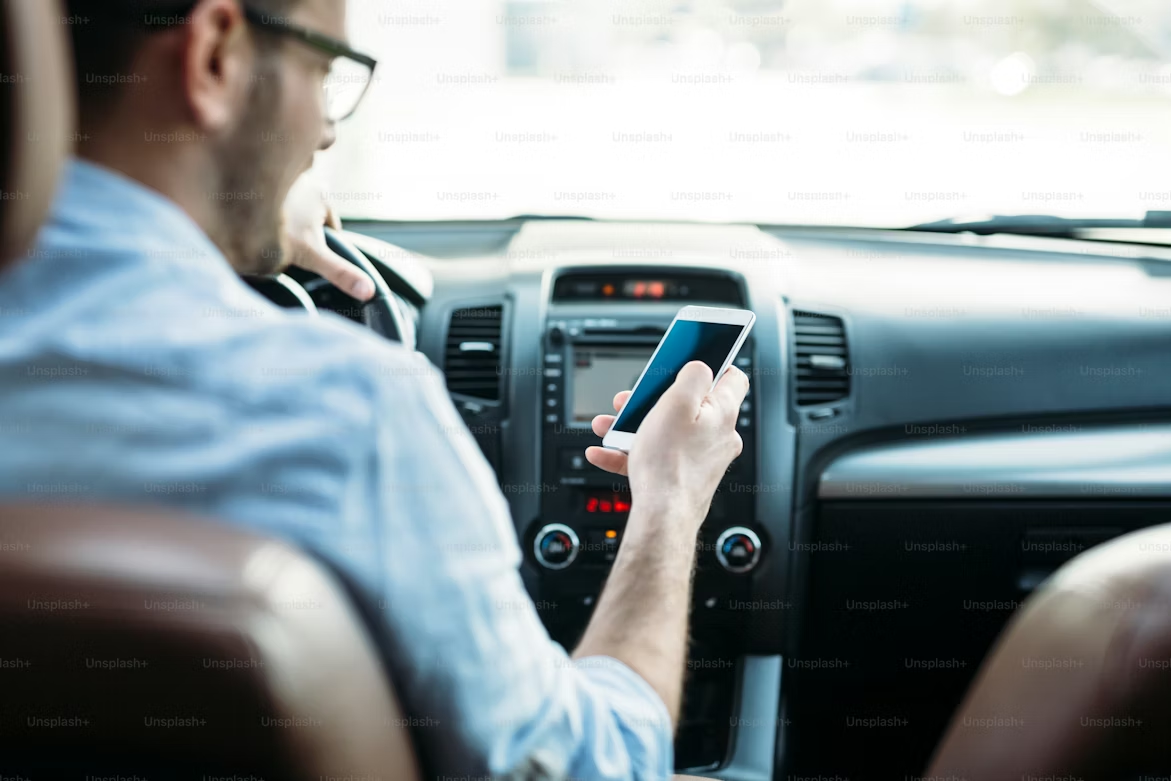
Long drives have a certain charm to them. Whether it’s a quiet highway stretching into the horizon or a cross-country trip filled with stops and surprises, the experience can be both freeing and demanding. One thing that consistently sits in the background, however, is fuel consumption. The longer the journey, the more noticeable the cost.
In recent years, mobile apps have quietly transformed how drivers manage fuel usage. What once required guesswork can now be tracked, analyzed, and optimized in real time. These apps don’t just record data—they help you make smarter decisions while you’re still on the road.
This article explores ten essential fuel-saving apps that can make a real difference during long drives. Along the way, you’ll find tables, comparisons, and practical insights to help you understand how these tools work and how to use them effectively.
understanding fuel consumption on long drives
Long-distance driving presents a different set of challenges compared to daily commuting. While city driving involves frequent stops and starts, long drives often include:
- extended periods of steady speed
- varying terrain (hills, highways, rural roads)
- changes in traffic density
- fatigue-related driving habits
Each of these factors influences how efficiently your vehicle uses fuel.
table: factors affecting fuel efficiency on long drives
| Factor | Impact on Fuel Use |
|---|---|
| Speed above 100 km/h | +10–20% usage |
| Frequent lane changes | +5–10% |
| Heavy cargo load | +5–15% |
| Poor route planning | +10% |
| Smooth cruising | -10–15% |
apps help reduce these inefficiencies by providing real-time feedback and planning tools.
- fuel tracking apps
Fuel tracking apps are the foundation of fuel efficiency awareness. They log every refill, calculate mileage, and present trends over time.
how they help on long drives
During long trips, it’s easy to lose track of fuel usage between stops. These apps automatically calculate:
- distance per liter
- cost per kilometer
- total fuel consumption
example tracking chart
| Segment | Distance | Fuel Used | Efficiency |
|---|---|---|---|
| City start | 50 km | 5 L | 10 km/L |
| Highway cruise | 200 km | 14 L | 14.3 km/L |
| Hilly terrain | 100 km | 9 L | 11.1 km/L |
By comparing segments, you can identify where fuel is being used inefficiently.
- gps navigation apps with traffic optimization
Navigation apps have evolved beyond simple directions. Modern versions analyze traffic in real time and suggest fuel-efficient routes.
key advantages
- avoids congestion
- reduces idle time
- suggests smoother routes
table: route choice comparison
| Route Type | Distance | Time | Fuel Impact |
|---|---|---|---|
| Short but busy | 90 km | long | higher |
| Longer but clear | 110 km | less | lower |
Sometimes, a slightly longer route can actually save fuel.
- eco-driving assistant apps
These apps monitor your driving behavior using phone sensors and GPS data.
they track
- acceleration patterns
- braking intensity
- speed consistency
real-time feedback encourages better habits
behavior improvement chart
| Driving Habit | Before App | After App |
|---|---|---|
| Harsh acceleration | frequent | reduced |
| Sudden braking | common | rare |
| Speed fluctuations | high | low |
Even subtle improvements can lead to noticeable fuel savings.
- trip planning apps
Trip planning apps allow you to map out your entire journey before starting.
they help with
- identifying fuel stops
- choosing optimal routes
- estimating fuel costs
planning reduces uncertainty
table: planned vs unplanned trip
| Factor | Planned Trip | Unplanned Trip |
|---|---|---|
| Fuel stops | optimized | random |
| Route efficiency | high | variable |
| Fuel cost | lower | higher |
- gas price comparison apps
Fuel prices can vary significantly between locations, especially on long routes.
these apps show
- nearby fuel stations
- price comparisons
- user-reported updates
example savings table
| Location | Price per Liter | Savings |
|---|---|---|
| Station A | higher | — |
| Station B | lower | saved |
Choosing the right station can reduce total trip cost.
- vehicle maintenance apps
Maintenance apps keep track of service schedules and vehicle health.
during long drives, this matters more than usual
a poorly maintained engine consumes more fuel, especially under continuous operation.
maintenance impact chart
| Condition | Fuel Efficiency |
|---|---|
| Clean air filter | optimal |
| Dirty air filter | -5–10% |
| Fresh oil | better |
| Old oil | reduced |
- idle tracking apps
Idle tracking apps monitor how long your engine runs while the car isn’t moving.
long drives often include stops
- rest breaks
- traffic jams
- waiting periods
idle time adds up quickly
table: idle time vs fuel waste
| Idle Time (Daily) | Fuel Loss |
|---|---|
| 10 minutes | low |
| 20 minutes | moderate |
| 30+ minutes | high |
These apps encourage turning off the engine when appropriate.
- tire pressure monitoring apps
Some apps connect with external sensors to provide real-time tire pressure data.
why it matters on long drives
Tire pressure can change due to temperature and road conditions. Improper pressure increases fuel consumption.
pressure impact table
| Tire Condition | Efficiency |
|---|---|
| Proper pressure | optimal |
| Slightly low | -2% |
| Very low | -5% |
- load and cargo management apps
These apps help drivers track how much weight they’re carrying and how it affects fuel consumption.
useful for road trips
- luggage planning
- balancing load
- reducing unnecessary weight
weight impact chart
| Extra Weight | Fuel Impact |
|---|---|
| 50 kg | +2% |
| 100 kg | +4% |
| 200 kg | +8% |
- hybrid and ev efficiency apps (also useful for fuel cars)
While designed for hybrid and electric vehicles, some features apply to fuel-powered cars as well.
they focus on
- energy efficiency patterns
- route optimization
- driving consistency
these insights translate well to fuel-saving strategies
combined impact of using multiple apps
Using just one app can help, but combining several creates a more comprehensive system.
example combinations
| App Combination | Estimated Savings |
|---|---|
| Navigation + fuel tracking | 8–12% |
| Eco-driving + idle tracking | 10–18% |
| Full suite (5+ apps) | 15–25% |
real-world scenario
Imagine a 500 km road trip.
baseline calculation
| Factor | Value |
|---|---|
| Fuel economy | 12 km/L |
| Fuel needed | 41.7 L |
with 15% improvement
| Factor | Value |
|---|---|
| Improved economy | 13.8 km/L |
| Fuel needed | 36.2 L |
| Fuel saved | 5.5 L |
That difference becomes even more significant on longer journeys.
daily habits supported by apps
Apps don’t just provide data—they shape behavior.
common improvements include
- smoother acceleration
- better route choices
- reduced idle time
- consistent speeds
behavior-driven savings chart
| Habit Change | Fuel Savings |
|---|---|
| Smooth driving | 10% |
| Route optimization | 5–10% |
| Less idling | 5–10% |
choosing the right apps
Not every app will suit every driver. The best combination depends on your needs.
quick selection guide
| Driver Type | Recommended Apps |
|---|---|
| Long-distance | Navigation + trip planning |
| Budget-focused | Fuel tracking + price comparison |
| Efficiency-driven | Eco-driving + idle tracking |
| Tech enthusiast | Full combination |
tips for maximizing results
- use apps consistently, not occasionally
- review data after each trip
- combine multiple tools for better insights
- focus on gradual improvement rather than instant results
long-term benefits
Beyond immediate fuel savings, these apps offer long-term advantages:
- better vehicle health
- improved driving awareness
- reduced maintenance costs
- lower environmental impact
common misconceptions
some drivers assume
apps are distracting
in reality, most apps are designed for minimal interaction while driving.
only new cars benefit
older vehicles can benefit just as much from behavior-based insights.
savings are too small
small daily savings add up significantly over time.
frequently asked questions
- do fuel-saving apps really make a difference on long drives?
Yes, especially when used consistently. They help optimize routes, improve driving habits, and reduce unnecessary fuel usage. - which app should I start with?
A navigation app with traffic optimization and a fuel tracking app are great starting points. - are these apps free?
Many apps offer free versions with basic features, while premium versions provide more detailed insights. - can I use multiple apps at the same time?
Yes, and doing so often leads to better results since each app focuses on different aspects of fuel efficiency. - do these apps work offline?
Some apps offer offline features, especially navigation tools, but real-time updates may require internet access. - how quickly will I see fuel savings?
Some improvements, like better route planning, show immediate results, while others, like improved driving habits, develop over time.
final thoughts
Long drives don’t have to mean high fuel costs. With the right apps, you can turn your smartphone into a powerful fuel-saving assistant. These tools don’t require major changes—just a willingness to pay attention and adjust.
What makes them effective is their ability to bring awareness into everyday driving. When you can see how your choices affect fuel consumption, you naturally start making better decisions. Over time, those decisions become habits, and those habits lead to consistent savings.
In the end, fuel efficiency isn’t about a single trick or tool. It’s about building a system—and these apps are some of the easiest and most practical pieces you can add to that system.