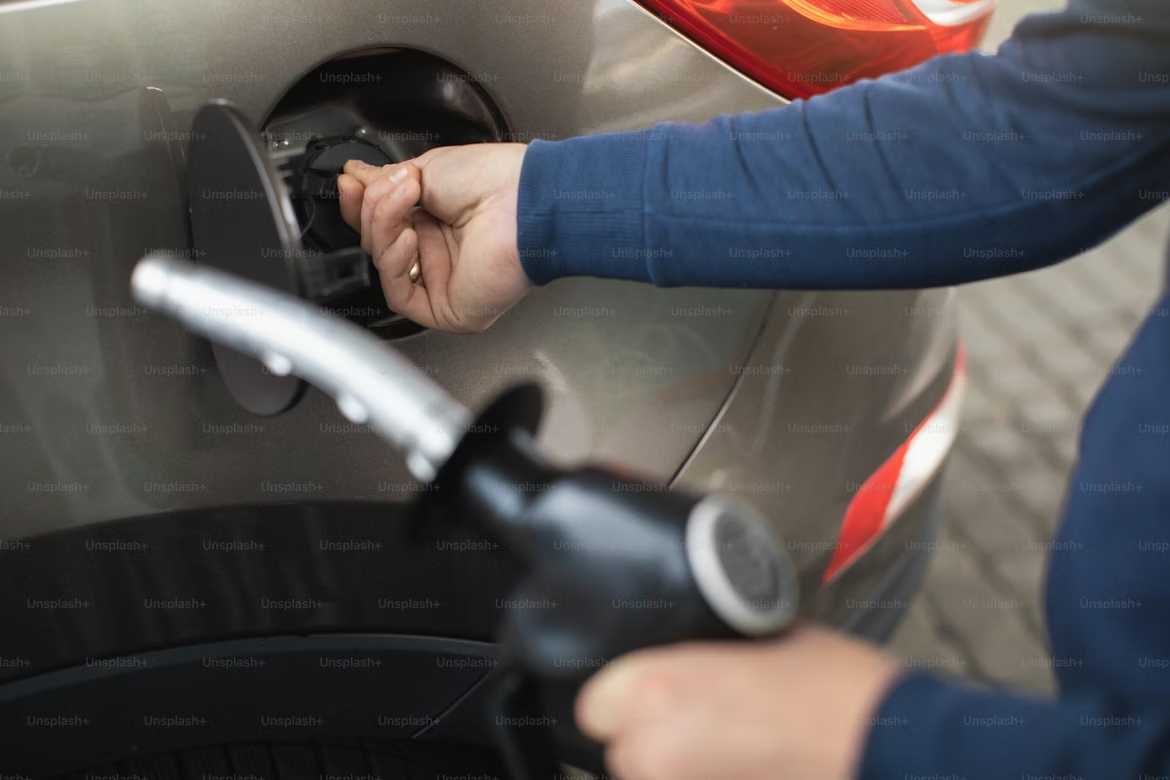
I didn’t start caring about fuel efficiency because I love cars or the environment. I started caring because my fuel bills were quietly draining my budget every single month. At first, I assumed there wasn’t much I could do about it—fuel prices go up, cars consume what they consume, and that’s just life. But over time, I realized something surprising: small, consistent changes in how I drive and maintain my car had a bigger impact than I ever expected.
What follows isn’t theory, and it’s not recycled advice you’ve seen everywhere. These are practical adjustments I tested during my daily commute—real traffic, real time pressure, real frustration—and they worked. Some of them felt almost too simple to matter, but the numbers proved otherwise.
This article breaks down the five most effective fuel-saving secrets I personally used, supported with data, tables, and real-world observations so you can actually apply them.
secret 1: mastering smooth acceleration and braking
The first change I made was also the hardest: changing how I press the accelerator and brake.
Like most drivers, I used to accelerate quickly after every stop and brake late. It felt efficient. In reality, it was wasting fuel constantly.
Fuel consumption spikes when:
- You accelerate aggressively
- You frequently brake hard
- You drive in a stop-and-go rhythm
Instead, I started focusing on smoothness:
- Gradual acceleration
- Anticipating traffic ahead
- Letting the car slow down naturally
This alone changed my driving style more than anything else.
Here’s a simplified comparison of fuel usage patterns:
Driving style vs fuel efficiency
| Driving Behavior | Fuel Consumption Level | Engine Load | Efficiency Outcome |
|---|---|---|---|
| Aggressive acceleration | High | High | Poor |
| Sudden braking | High | Variable | Poor |
| Smooth acceleration | Moderate | Balanced | Good |
| Coasting to stop | Low | Low | Excellent |
What I noticed over two weeks:
- My average fuel consumption dropped by around 10–15%
- The car felt less stressed
- I needed fewer sudden stops
The key idea is momentum. Every time you brake unnecessarily, you throw away energy that fuel already paid for.
secret 2: maintaining optimal tire pressure
This is the most underrated factor in fuel efficiency.
I used to ignore tire pressure completely unless a tire looked visibly flat. That was a mistake.
Underinflated tires increase rolling resistance, which forces the engine to work harder.
After I started checking tire pressure every two weeks, I saw consistent improvement.
Impact of tire pressure on fuel consumption
| Tire Condition | Rolling Resistance | Fuel Efficiency Impact |
|---|---|---|
| Properly inflated | Low | Optimal |
| Slightly underinflated | Medium | -3% to -5% |
| Severely underinflated | High | -10% or worse |
What I changed:
- Checked pressure with a gauge instead of guessing
- Followed manufacturer-recommended PSI
- Adjusted pressure when weather changed
An interesting observation: temperature matters. On colder mornings, tire pressure drops slightly, which can quietly reduce efficiency if you don’t adjust for it.
secret 3: reducing unnecessary weight and drag
I didn’t realize how much unnecessary weight I was carrying in my car until I cleaned it out.
Old tools, random bags, unused items in the trunk—it all adds up. Even an extra 40–50 kg can impact fuel usage over time.
There are two types of resistance to think about:
- Weight (mass the engine must move)
- Aerodynamic drag (air resistance at speed)
Here’s what I removed:
- Unused items in the trunk
- Roof rack when not needed
- Heavy accessories
Effect of weight on fuel efficiency
| Extra Weight Added | Fuel Consumption Increase |
|---|---|
| 25 kg | ~1–2% |
| 50 kg | ~2–4% |
| 100 kg | ~5%+ |
Aerodynamics matter more at higher speeds. Even something like an open window at highway speed increases drag.
Comparison of drag effects:
| Condition | Drag Level | Fuel Impact |
|---|---|---|
| Windows closed | Low | Best |
| Windows open (high speed) | Medium | Moderate loss |
| Roof rack installed | High | Noticeable loss |
This change didn’t feel dramatic day-to-day, but over a month, the savings were real.
secret 4: driving at consistent speeds
Before, my speed was constantly fluctuating. Speed up, slow down, accelerate again. It felt normal, especially in traffic.
But engines are most efficient at steady speeds.
The more you fluctuate, the more fuel you burn.
So I started:
- Maintaining a steady speed whenever possible
- Using higher gears at the right time
- Avoiding unnecessary acceleration bursts
Here’s how speed affects fuel efficiency:
Speed vs fuel efficiency trend
| Speed Range (km/h) | Efficiency Level |
|---|---|
| 0–20 | Very Low |
| 20–50 | Moderate |
| 50–80 | Optimal |
| 80–100 | Good |
| 100+ | Declining |
The “sweet spot” for most cars is around 50–80 km/h.
In city driving, this is harder—but not impossible. Even maintaining consistency between signals made a difference.
Another trick I used:
- Watching traffic flow ahead
- Adjusting speed early instead of reacting late
This reduced braking, improved flow, and saved fuel.
secret 5: minimizing idling and smart route planning
Idling is silent fuel loss.
Before, I didn’t think twice about:
- Waiting with the engine running
- Sitting in traffic without switching off
- Taking longer routes out of habit
But idling burns fuel without moving you anywhere.
Fuel usage during idle:
| Time Spent Idling | Fuel Wasted (Approx) |
|---|---|
| 10 minutes | 0.1–0.2 liters |
| 30 minutes | 0.3–0.6 liters |
| 1 hour | 0.6–1 liter |
I started doing two things:
- Turning off the engine if stopped for more than a minute
- Planning routes before leaving
Route planning made a surprisingly big difference.
Route comparison example:
| Route Type | Distance | Traffic Level | Fuel Used |
|---|---|---|---|
| Short but congested | 8 km | High | High |
| Slightly longer but smooth | 10 km | Low | Lower |
A longer route isn’t always worse. Smooth traffic flow often saves more fuel than shorter, stop-heavy routes.
combined impact of all five changes
Individually, each change seemed small. But combined, they created a noticeable improvement.
Overall improvement summary:
| Change Applied | Estimated Savings |
|---|---|
| Smooth driving | 10–15% |
| Tire pressure maintenance | 3–5% |
| Weight reduction | 2–5% |
| Speed consistency | 5–10% |
| Reduced idling & better routes | 5–10% |
Total realistic combined savings:
20% to 30% reduction in fuel consumption
This wasn’t instant. It took about 3–4 weeks of consistent driving habits to see stable results.
a simple visual breakdown (text chart)
Fuel savings contribution (approximate)
Smooth driving ██████████████
Speed consistency ██████████
Reduced idling █████████
Tire pressure ██████
Weight reduction █████
This gives a rough idea of which factors had the biggest impact in my experience.
what surprised me the most
Three things stood out during this entire process:
First, behavior matters more than the car itself. You don’t need a new car to improve fuel efficiency—you need better habits.
Second, consistency beats perfection. I didn’t drive perfectly every day, but small improvements added up.
Third, awareness changes everything. Once you start noticing how you drive, you naturally become more efficient.
faqs
- how quickly can I see fuel savings after changing driving habits
You can start noticing small improvements within a few days, but meaningful and consistent results usually appear after 2–3 weeks of regular practice. - does turning off the engine frequently damage the car
Modern cars are designed to handle frequent starts. As long as your battery and starter are in good condition, turning off the engine during long stops is safe. - is it better to use air conditioning or open windows for fuel saving
At low speeds, open windows are fine. At higher speeds, closed windows with AC is usually more efficient due to reduced aerodynamic drag. - how often should I check tire pressure
Ideally every two weeks, and always before long trips. Also check when seasons change, as temperature affects pressure. - do these techniques work for automatic cars as well
Yes, all of these methods apply to both manual and automatic cars. In fact, smooth driving and steady speeds are even easier to maintain in automatics. - can aggressive driving really make that much difference
Yes. Aggressive acceleration and braking can increase fuel consumption by 20% or more compared to smooth driving in the same conditions.
In the end, fuel efficiency isn’t about one big trick. It’s about stacking small, smart habits that work together. Once these habits become automatic, saving fuel stops feeling like effort—and starts feeling like control.