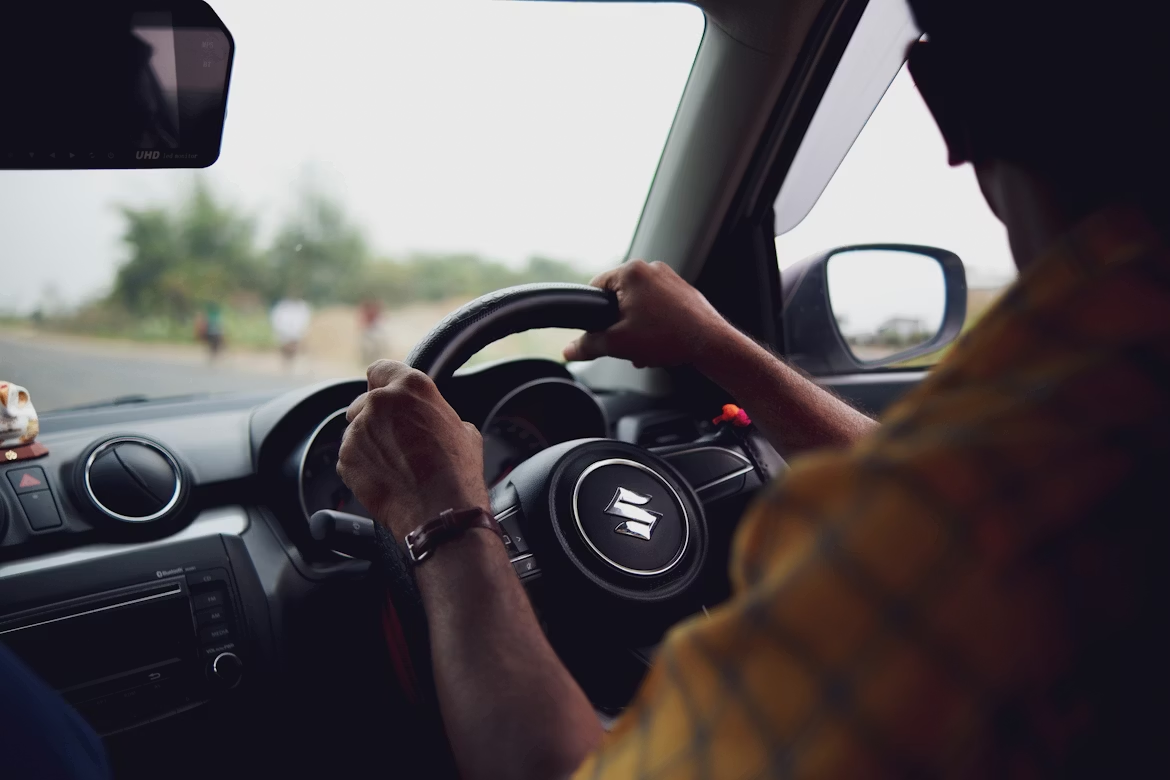
There’s a strange kind of regret that comes with realizing you’ve been doing something the hard way for years—especially when the fix turns out to be simple. That’s exactly how fuel efficiency felt after I started paying attention to it.
For a long time, I blamed fuel costs on external factors: traffic, engine size, road conditions, even weather. What I didn’t realize was how much of it came down to everyday driving habits—small, repeatable actions that quietly drained fuel without ever drawing attention.
This article isn’t built on theory or ideal conditions. It’s shaped by experience—mistakes made, patterns noticed, and adjustments that eventually led to meaningful savings. These are nine basic fuel-saving habits I wish I had learned earlier. None of them are complicated. But together, they change everything.
why simple habits matter more than complex fixes
Before diving into the basics, it helps to understand one thing: fuel efficiency is not a single decision—it’s a chain of decisions.
Here’s how different factors typically contribute:
| Factor Category | Influence Level |
|---|---|
| Driving Behavior | Very High |
| Vehicle Condition | High |
| Road & Traffic | Medium |
| Weather Conditions | Low-Medium |
The takeaway is clear—how you drive matters more than most people think.
basic 1: acceleration isn’t a race
What I used to do
Press the accelerator quickly to reach speed as fast as possible.
What I learned
Fast acceleration burns more fuel than necessary. Engines respond by injecting extra fuel to deliver that sudden power.
comparison:
| Acceleration Style | Fuel Usage |
|---|---|
| Aggressive | High |
| Gradual | Lower |
real change
Once I started accelerating smoothly, the car felt calmer—and fuel consumption dropped almost immediately.
basic 2: braking early saves more than you think
What I used to do
Drive up to a stop and brake late.
What I learned
Late braking wastes the energy already used to move the car forward.
efficiency comparison:
| Braking Pattern | Fuel Impact |
|---|---|
| Late Braking | Higher Waste |
| Early Braking | Lower Waste |
real change
By easing off the accelerator earlier, I reduced the need for hard braking—and used less fuel overall.
basic 3: idling is more expensive than it looks
What I used to do
Leave the engine running during short stops—thinking it didn’t matter.
What I learned
Idling consumes fuel continuously without covering any distance.
idle impact:
| Idle Time | Fuel Waste Level |
|---|---|
| Under 1 min | Minimal |
| 5 minutes | Noticeable |
| 15+ minutes | Significant |
real change
Turning off the engine during longer waits became an easy habit with real savings.
basic 4: speed consistency beats speed itself
What I used to do
Constantly adjust speed—accelerating, slowing, then accelerating again.
What I learned
Frequent speed changes increase fuel consumption more than steady driving at slightly higher speeds.
comparison:
| Driving Style | Efficiency |
|---|---|
| Fluctuating Speed | Low |
| Consistent Speed | High |
real change
Maintaining a steady pace made driving smoother and more efficient.
basic 5: tire pressure isn’t optional
What I used to do
Check tire pressure occasionally—if I remembered.
What I learned
Underinflated tires increase resistance, forcing the engine to work harder.
pressure effect:
| Tire Condition | Fuel Efficiency |
|---|---|
| Low Pressure | Reduced |
| Correct Pressure | Optimized |
real change
Regular pressure checks became part of routine maintenance—and mileage improved.
basic 6: short trips are surprisingly inefficient
What I used to do
Use the car for multiple short errands throughout the day.
What I learned
Each trip starts with a cold engine, which consumes more fuel.
trip comparison:
| Trip Type | Efficiency |
|---|---|
| Multiple Short Trips | Lower |
| Combined Trip | Higher |
real change
Grouping errands into one trip reduced both fuel use and time spent driving.
basic 7: extra weight adds up quickly
What I used to do
Keep unnecessary items in the trunk without thinking twice.
What I learned
Extra weight requires more energy to move.
weight impact:
| Extra Load | Efficiency Impact |
|---|---|
| 20–30 kg | Slight |
| 50+ kg | Noticeable |
real change
Clearing out unused items made the car feel lighter—and slightly more responsive.
basic 8: highway speed matters more than expected
What I used to do
Drive faster on highways assuming it saves time without much cost.
What I learned
Fuel consumption increases significantly at higher speeds.
speed efficiency:
| Speed Range | Fuel Efficiency |
|---|---|
| 60–80 km/h | Best |
| 80–100 km/h | Moderate |
| 100+ km/h | Reduced |
real change
Reducing speed slightly on highways led to noticeable savings over long distances.
basic 9: anticipation changes everything
What I used to do
React to traffic—braking suddenly, accelerating quickly.
What I learned
Anticipating traffic flow reduces unnecessary movements.
driving behavior:
| Style | Fuel Impact |
|---|---|
| Reactive | Higher |
| Predictive | Lower |
real change
Looking further ahead made driving smoother and more efficient.
combined impact of these basics
Individually, each habit offers a small improvement. Together, they create a significant difference.
combined savings estimate:
| Number of Basics Applied | Efficiency Gain |
|---|---|
| 3 Basics | 8–10% |
| 6 Basics | 12–18% |
| All 9 Basics | 18–25% |
This level of improvement can rival some mechanical upgrades—without any cost.
monthly savings breakdown
| Monthly Fuel Spend | 15% Savings | 25% Savings |
|---|---|---|
| $120 | $18 | $30 |
| $250 | $37.5 | $62.5 |
| $400 | $60 | $100 |
yearly perspective:
| Monthly Spend | Annual Savings (20%) |
|---|---|
| $150 | $360 |
| $300 | $720 |
| $500 | $1,200 |
These numbers highlight how small changes compound over time.
why these basics are often ignored
It’s not that these habits are unknown—they’re just easy to overlook.
common reasons:
- Driving habits become automatic
- Immediate results aren’t always visible
- Focus is on reaching the destination quickly
- Small inefficiencies seem insignificant
The problem isn’t lack of knowledge—it’s lack of attention.
how habits gradually change
The shift doesn’t happen overnight. It builds through awareness and repetition.
simple method:
step 1: pick one habit to focus on
step 2: practice it daily for a week
step 3: add another habit gradually
step 4: observe changes in driving feel and fuel usage
Eventually, these actions become second nature.
unexpected benefits beyond fuel savings
What started as an effort to save fuel turned into a better overall driving experience.
additional benefits:
- Reduced wear on brakes and tires
- Smoother, more controlled driving
- Less stress in traffic
- Improved safety through better anticipation
Efficiency and comfort often go hand in hand.
a shift in mindset
The biggest change wasn’t in the car—it was in perspective. Driving stopped being reactive and became more intentional.
Instead of asking, “How fast can I get there?” the question became, “How smoothly can I get there?”
That shift alone made a measurable difference.
final reflections
Looking back, the most surprising part is how simple these basics are. None of them require special tools, technical knowledge, or extra time.
What they require is awareness.
Once you start noticing how fuel is used—and wasted—your driving naturally adjusts. And with that adjustment comes savings that feel almost effortless.
If there’s one lesson in all of this, it’s that fuel efficiency isn’t hidden in complex systems. It’s right there in everyday decisions, waiting to be noticed.
frequently asked questions
- Do these basics really make a big difference?
Yes. When combined, they can improve fuel efficiency by up to 20–25%. - Which habit should I start with?
Start with smooth acceleration and reducing idling—both show quick results. - Are these techniques difficult to maintain?
No. After a few weeks, they become natural driving habits. - Can these basics work for automatic cars?
Yes, they apply to both manual and automatic vehicles. - How long before I see noticeable savings?
Most drivers notice changes within a few days to a couple of weeks. - Do these habits affect travel time?
In most cases, no. They often make driving smoother without significantly increasing travel time.
In the end, the biggest fuel-saving upgrade isn’t something you install—it’s something you learn. And sometimes, it just takes a little too long to realize how simple it really is.