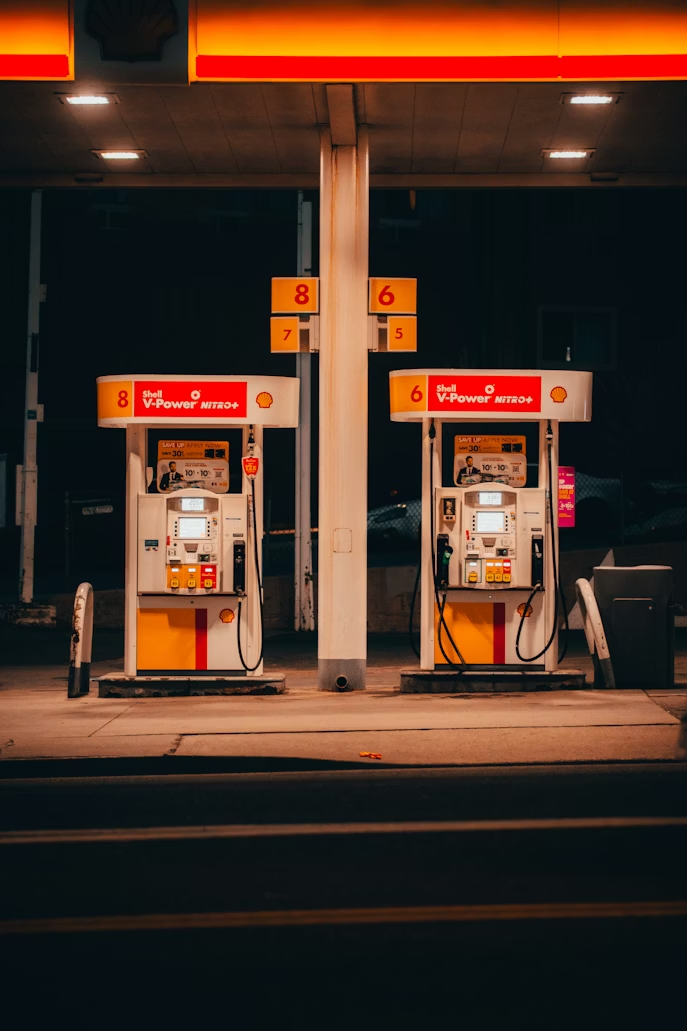
There’s a quiet shift happening in how people think about fuel efficiency. Not long ago, saving fuel meant driving less, buying a smaller car, or just accepting the rising cost as unavoidable. But now, a different approach is gaining ground—one that blends everyday technology with smarter habits. It’s not about radical change. It’s about small, consistent upgrades that quietly reduce fuel consumption without disrupting your routine.
This guide focuses on five practical, tech-driven fuel-saving hacks that don’t require mechanical expertise or expensive investments. These are solutions that fit into daily life—tools you can install, apps you can download, and habits you can adopt almost immediately. The goal isn’t just to save fuel once, but to create a system that keeps working in the background.
understanding the hidden patterns of fuel waste
Before diving into the hacks, it helps to understand a simple truth: most fuel waste doesn’t come from one big mistake. It comes from small, repeated inefficiencies.
Think of:
- accelerating harder than necessary
- braking too often
- sitting in traffic without adjusting routes
- ignoring tire pressure
- carrying unnecessary weight
Each of these may seem minor, but together they create a steady drain on fuel.
table: everyday driving habits vs fuel impact
| habit | fuel impact level | fix difficulty |
|---|---|---|
| aggressive acceleration | high | easy |
| frequent short trips | medium | moderate |
| underinflated tires | medium | easy |
| unnecessary idling | high | easy |
| poor route planning | medium | easy |
What makes modern fuel-saving strategies effective is that they target these patterns using simple technology.
hack 1: real-time fuel monitoring with obd2 devices
One of the most effective tools you can use is an OBD2 (On-Board Diagnostics) device. These small plug-in gadgets connect to your car and instantly start collecting data.
But the real value isn’t just in the data—it’s in how it changes your behavior.
When you can see your fuel consumption spike during sudden acceleration or inefficient driving, you naturally begin to adjust. It’s similar to tracking your steps when trying to stay active—awareness creates change.
what it tracks:
- real-time fuel economy
- engine load
- idle time
- trip efficiency
- maintenance alerts
table: behavior change after obd2 usage
| driving behavior | before device | after device |
|---|---|---|
| acceleration style | inconsistent | smoother |
| idle awareness | low | high |
| fuel tracking | occasional | consistent |
estimated savings:
10% to 20% improvement in fuel efficiency, especially for drivers who were previously unaware of their habits.
practical example:
A driver commuting daily may not realize how much fuel is wasted during stop-and-go traffic. With an OBD2 monitor, they start noticing spikes in fuel usage and begin accelerating more gradually. Over a month, the difference becomes visible not just in data, but in reduced fuel expenses.
hack 2: smart navigation apps that avoid fuel traps
Navigation apps have evolved far beyond simple directions. Today, they use real-time traffic data, predictive algorithms, and even crowd-sourced updates to guide you through the most efficient routes.
What many drivers overlook is how much fuel is wasted sitting in traffic or taking longer routes without realizing it.
key advantages:
- real-time traffic avoidance
- alternative route suggestions
- estimated fuel consumption
- time vs fuel trade-off analysis
table: route efficiency comparison
| route type | travel time | fuel usage |
|---|---|---|
| shortest distance | moderate | medium |
| fastest route | low | lower |
| traffic-heavy | high | highest |
chart: fuel use vs traffic delay
| delay (minutes) | extra fuel used |
|---|---|
| 5 | +5% |
| 10 | +10% |
| 20 | +20% |
why it works:
Engines burn fuel inefficiently during stop-and-go traffic. Avoiding congestion not only saves time but also reduces fuel consumption significantly.
real-world insight:
Drivers who switch to smarter route planning often report immediate savings, especially in urban environments where traffic patterns fluctuate throughout the day.
hack 3: tire pressure monitoring systems (tpms)
Tires are often overlooked when it comes to fuel efficiency, yet they play a critical role. Underinflated tires increase resistance, forcing the engine to work harder.
A Tire Pressure Monitoring System (TPMS) removes the guesswork by providing real-time pressure readings and alerts.
what it solves:
- unnoticed pressure drops
- uneven tire wear
- inefficient rolling resistance
table: tire pressure vs fuel efficiency
| pressure level | fuel efficiency impact |
|---|---|
| optimal | baseline |
| slightly low | -2% |
| moderately low | -5% |
| severely underinflated | -10% or more |
additional benefit:
Maintaining proper tire pressure also extends tire life, reducing replacement costs.
usage tip:
Check tire pressure during seasonal changes. Temperature fluctuations often cause pressure variations without obvious signs.
hack 4: eco-driving apps that reshape habits
Eco-driving apps act like digital coaches. They track how you drive and provide feedback designed to improve efficiency.
Unlike static advice, these apps adapt to your driving patterns.
features include:
- acceleration analysis
- braking patterns
- speed consistency tracking
- trip scoring
table: driving behavior improvements
| behavior | improvement potential |
|---|---|
| smooth acceleration | 10–15% savings |
| reduced braking | 5–10% savings |
| steady speed | 5% savings |
chart: driving score vs fuel efficiency
| driving score | fuel efficiency gain |
|---|---|
| 50/100 | baseline |
| 70/100 | +10% |
| 90/100 | +20% |
why it works:
Most drivers overestimate how efficiently they drive. Objective feedback helps correct this gap.
long-term impact:
Over time, improved driving habits become automatic, meaning the savings continue even if you stop actively using the app.
hack 5: lightweight tech upgrades and load management
Reducing vehicle weight may sound simple, but technology has made it easier than ever.
Modern solutions include:
- lightweight lithium batteries
- compact emergency kits
- digital manuals replacing paper clutter
table: weight reduction vs fuel savings
| weight removed | fuel efficiency gain |
|---|---|
| 10 kg | ~1% |
| 25 kg | ~2–3% |
| 50 kg | ~5% |
hidden weight sources:
- unused tools
- heavy accessories
- roof racks not in use
important insight:
Even small reductions matter because they improve efficiency continuously, unlike one-time changes.
combining the five hacks
Individually, each hack provides moderate savings. Combined, they create a powerful system.
table: combined savings potential
| combination level | estimated savings |
|---|---|
| single hack | 5–15% |
| two combined | 15–25% |
| three or more combined | 25–35% |
example scenario:
A driver spends $300 per month on fuel.
After applying three hacks:
- new monthly cost: $210–$225
- yearly savings: $900–$1,080
This demonstrates how small improvements scale over time.
cost vs savings breakdown
| hack | cost range | payback time |
|---|---|---|
| obd2 device | low | 1–2 months |
| navigation apps | free | immediate |
| tpms | low | 2–3 months |
| eco-driving apps | free/low | immediate |
| weight reduction upgrades | low/medium | 3–6 months |
choosing what works for you
Not every driver needs all five hacks. The best approach depends on your driving style.
city drivers:
- prioritize navigation apps
- focus on idling reduction
- use eco-driving tools
highway drivers:
- maintain tire pressure
- reduce weight
- drive at consistent speeds
mixed drivers:
- combine monitoring tools with habit-based apps
common mistakes to avoid
- ignoring data from monitoring tools
- assuming all routes are equally efficient
- delaying tire maintenance
- expecting instant dramatic results
- using too many apps without consistency
fuel-saving tech is effective only when used regularly.
long-term benefits beyond fuel savings
These hacks don’t just reduce fuel costs. They also:
- improve engine health
- reduce maintenance expenses
- extend vehicle lifespan
- lower environmental impact
Over time, the financial and practical benefits multiply.
frequently asked questions
- do simple tech hacks really make a difference in fuel savings?
Yes. While each hack may seem small on its own, combining them can lead to significant reductions in fuel consumption over time. - what is the easiest hack to start with?
Using navigation and eco-driving apps is the easiest starting point since they require no installation and provide immediate feedback. - how quickly can i see results?
Some improvements, like better route planning, show results within days. Others, like driving habit changes, become noticeable within a few weeks. - are obd2 devices safe for all cars?
Most modern vehicles support OBD2 devices, but it’s important to choose a compatible and reliable model. - does reducing vehicle weight really matter?
Yes. Even small reductions improve efficiency because the engine works less to move the vehicle. - can i rely only on apps without hardware upgrades?
Apps alone can provide meaningful savings, but combining them with hardware upgrades maximizes results.
final thoughts
Fuel efficiency isn’t about one big solution—it’s about a collection of small, smart decisions supported by simple technology. The beauty of these hacks lies in their accessibility. You don’t need advanced knowledge or a large budget. You just need the willingness to pay attention and make gradual improvements.
When these tools and habits come together, they create a system that quietly reduces costs, improves driving efficiency, and makes every trip a little smarter. Over time, the savings become not just noticeable, but substantial enough to change how you think about fuel altogether.