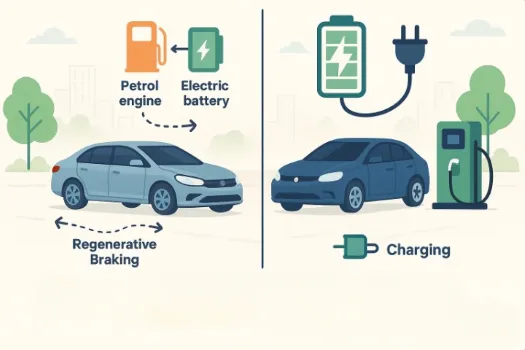
braking for maximum regenerative charge
Regenerative braking is the hybrid’s superpower—it turns kinetic energy into battery charge instead of wasting it as heat in friction brakes. The more you regen, the more electric power you store for later EV running.
Tip: brake early and gently. Look 100-200 meters ahead—see brake lights or a slowdown? Lift off the accelerator first to let engine braking and mild regen slow you. Only touch the brake pedal when needed, and press progressively. Most hybrids show regen strength on the display—aim for the middle-to-high zone without slamming into friction brakes (which kick in harder at the end of pedal travel).
This is huge in our traffic: at a long signal on Korangi Road or in a jam near the airport, coasting and light braking recharges the battery while you wait. I used to hit the brakes late—wasted energy and less charge. Switching to early, smooth stops added 1-2 km/l easily, especially in city loops. In hot weather, regen works fine but avoid aggressive stops that heat the system unnecessarily. Use “B” mode (engine braking) on downhills or long slows if available—it maximizes regen without friction.
Use Eco or EV mode strategically in traffic and low speeds
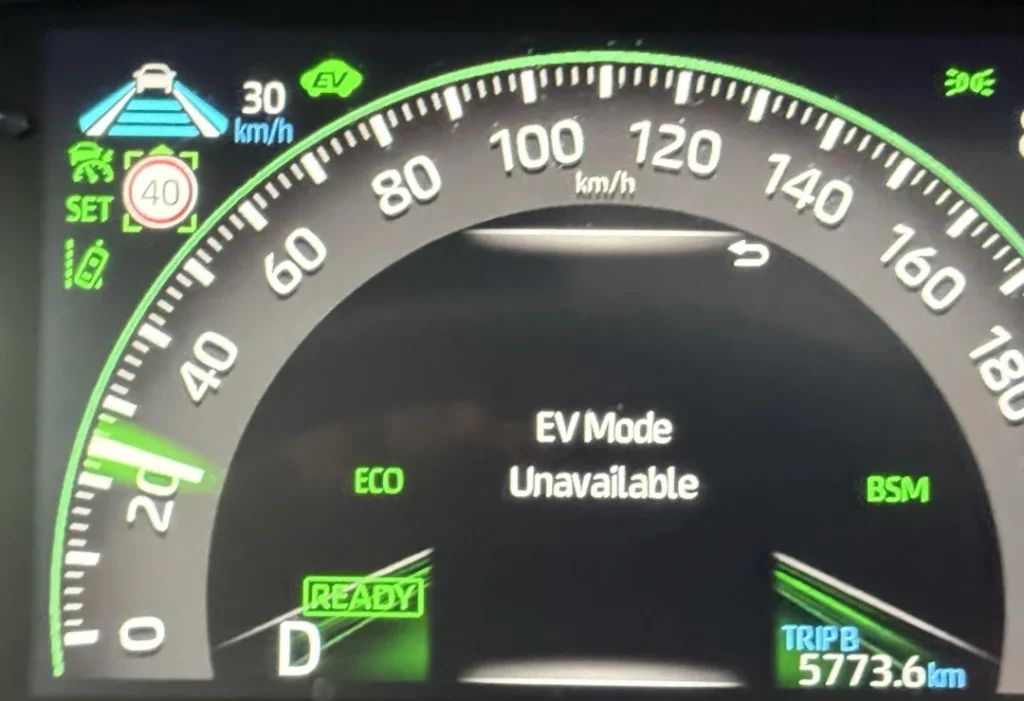
Most hybrids have drive modes—Eco, Normal, Sport, and often EV. Eco softens throttle response, optimizes climate control, and prioritizes electric assist. EV forces electric-only (up to a certain speed or battery level).
In Karachi, Eco mode is your friend for most driving. It dials back acceleration aggression, helping stay in electric longer, and reduces AC compressor load slightly. Switch to it after starting (when battery is charged) for city runs. EV mode shines for short, low-speed stretches—like creeping in heavy traffic or residential areas—running purely electric with zero petrol use.
Don’t overuse EV on highways or when battery is low—it drains fast and forces engine on sooner. In heat, Eco helps manage battery temperature by limiting power draw. On my daily commute, starting in Eco and flipping to EV at signals or jams pushes averages higher without extra effort. Test modes on the same route—Eco usually wins for mixed city driving here.
Maintain steady speeds and anticipate flow
Hybrids love consistency—steady speeds let the system balance engine and electric optimally. Speed surges and drops force inefficient shifts between power sources.
The habit: cruise at 60-80 km/h where possible, using cruise control on clearer stretches (Motorway or Superhighway). Anticipate traffic—ease off early for slowdowns, coast in gear to regen. Avoid yo-yo speeds in lanes.
In our conditions, this cuts unnecessary engine-on time. A steady 70 km/h on open roads often yields better economy than 90-100 km/h bursts. I dropped average speed slightly but gained 3-4 km/l on highway runs. Use the hybrid display to see when engine runs minimally—steady throttle keeps it that way.
Smart AC and climate control use to reduce battery/engine load
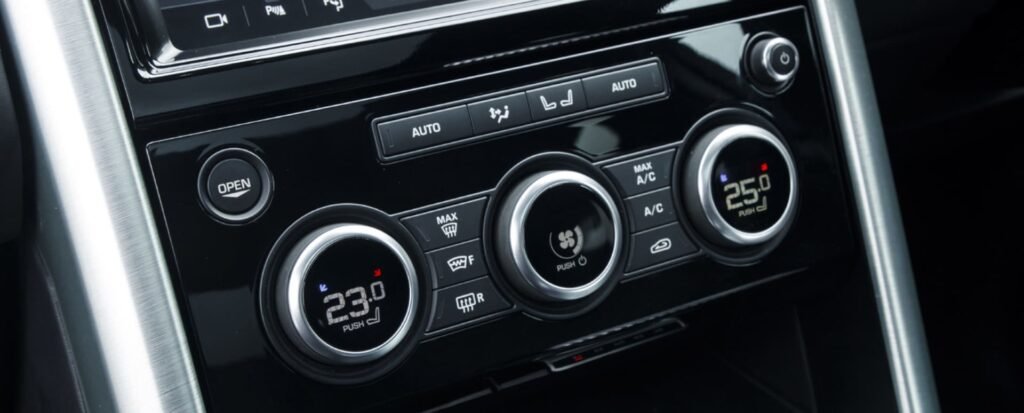
In 45°C Karachi summers, AC is non-negotiable, but it hits hybrids hard—compressor draws power, often running the engine more to charge the battery.
Tips: start with recirc mode (reuses cool cabin air—less work), set 24-26°C (not 18°C), use fan on medium. Vent hot air first by opening windows briefly before AC. Park in shade or use a sunshade—cabin stays cooler, less initial load.
In traffic, recirc + moderate settings saved noticeable fuel vs. full cold blast. Hybrids often run engine to support AC even in EV—Eco mode mitigates this. Pre-cool if plugged in (PHEVs), but for standard hybrids, shade parking helps most.
These five—gentle acceleration for EV priority, smooth braking for regen, strategic Eco/EV modes, steady speeds with anticipation, and smart AC—transform hybrid efficiency in our environment. No waiting for maintenance; start today. Track fills: note odometer and liters each time. In Karachi traffic and heat, these habits push real-world averages toward brochure numbers—often 22-28 km/l mixed. Drive smoother, stay cooler, spend less at pumps. Hybrids reward mindful driving; make it a habit and watch the savings add up tank after tank.